
Vertical Hydroponic Gardens
I have too many indoor gardens.
But if I were moving tomorrow and could only take one with me, it would be an easy decision!
I’d take one of my vertical hydroponic gardens.
Gardening vertically has so many benefits:
It’s easier on your back.
It allows for more airflow which leads to healthier, happier plant
And it’s a great use of space – crucial when you live in a small, NYC apartment like I do!
I’ve tried out vertical indoor gardens from all different hydroponic manufacturers.
So today, I’m compiling a buyers guide of all the best vertical indoor gardens on the market, so you can choose the right one for your needs.
Best Vertical Indoor Garden Systems
- Best Modular Vertical Garden: Lettuce Grow Farmstand
- Easiest to Clean & Manage: Click & Grow Smart Garden 27
- Best for Growing Large Vegetables: Aerogarden Farm XL
- Best for Small Spaces: Lettuce Grow Nook
- Most Aesthetic: Gardyn Studio 2
- Best for Indoor & Outdoor Use: Tower Garden
I’m assuming you already know the benefits of gardening vertically and have chosen the right kind of seeds and plants for your hydroponic garden.
So I won’t get into any of that here.
You can check out all my guides on indoor vertical gardening here.
And I wrote a comprehensive, 175-page ebook covering everything I’ve learned about gardening indoors in the last 10 years.
If you’re looking to grow fresh herbs and leafy greens in a small space, check out the guide here.
The Indoor Gardening Guidebook
I wrote down everything I know about Indoor Gardening!
My exhaustive 175+ ebook takes you from black thumbs to expert indoor gardener in one, easy-to-read digital guide:
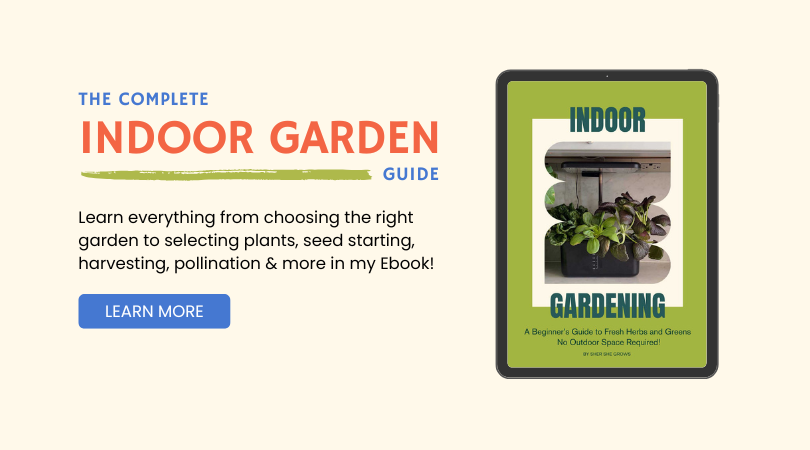
By the end of it, you'll know exactly how to grow your own pesticide-free produce (no matter the size of your home)!
Take a look inside the book here.
Best Indoor Garden Towers
Let’s get right into the product reviews!
Click & Grow Smart Garden 27
Shop at: Click & Grow
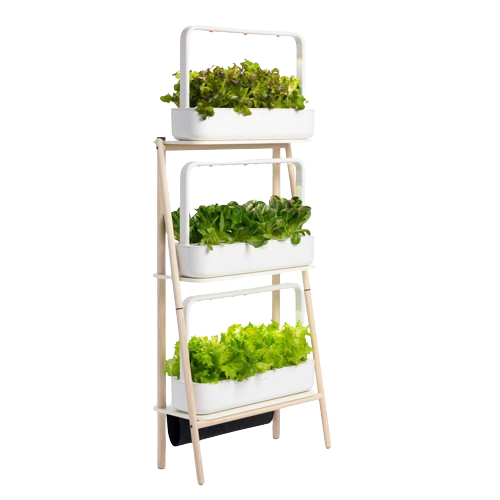
If you want to maximize vertical height and grow as much as possible, but with the least amount of effort….
the Click & Grow Smart Garden 27 is for you.
It’s perhaps my most aesthetic garden – sleek and stylish, with a Scandinavian design style.
And it’s designed to work for anyone – no green thumb required.
This vertical garden is composed of three Smart Garden 9s and includes a cute plant stand.
I always get tons of questions on where the plant stand is from – it’s included with the garden! And it’s really nicely designed.
Each shelf has a slight groove, so that the gardens snap neatly in place.
All the electrical cords can be tucked into the sides of the gardens and then neatly held in place by the back corner of the plant stand, so everything looks neat and tidy.
It was easy to assemble, has a very small footprint, and there’s a hidden storage shelf at the base for storing accessories and small equipment.
Click & Grow really puts a lot of thought into all their products!


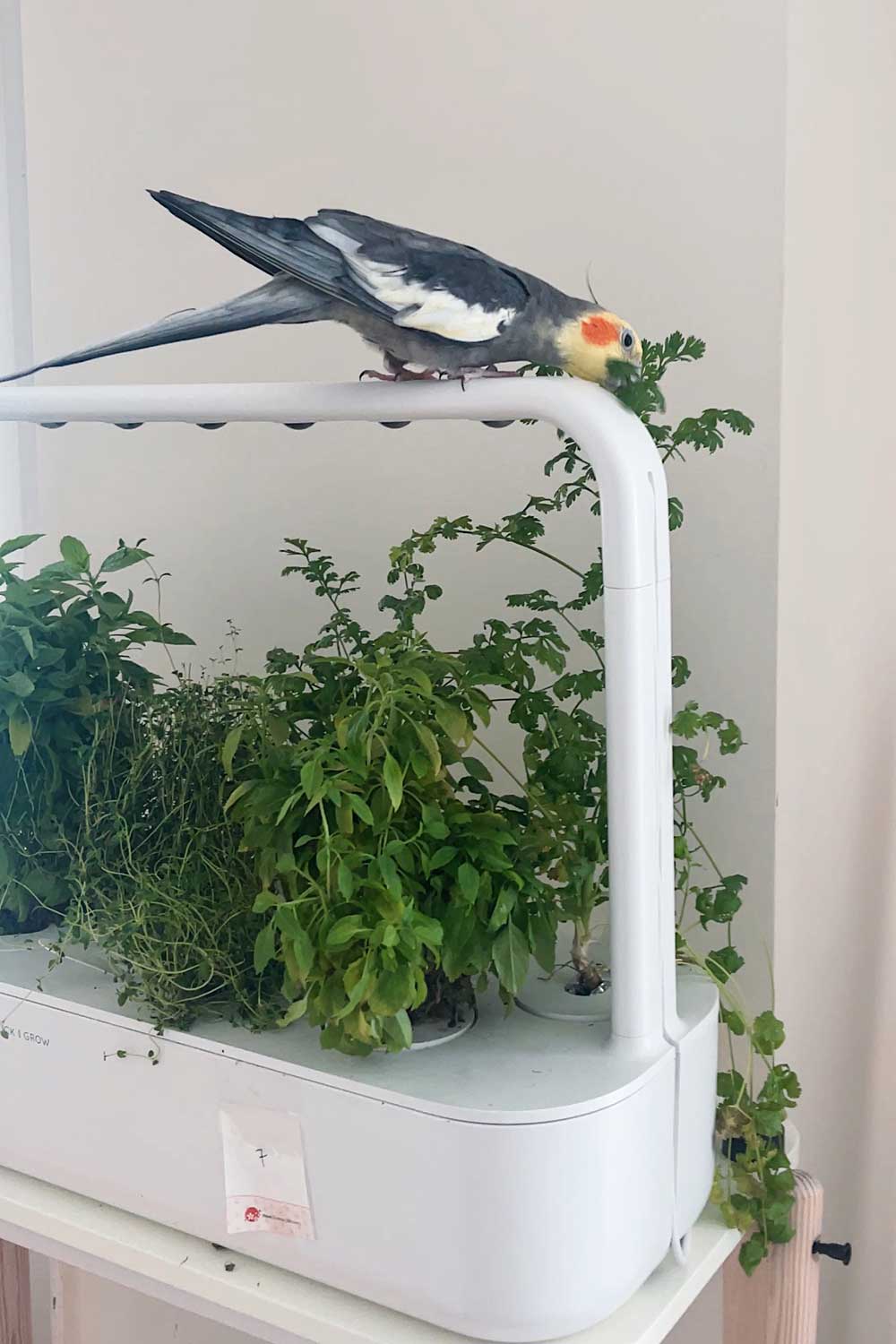
with 3 separate, stacked gardens you can grow different plants in each!
What I like best about the Click & Grow indoor garden is it allows you to take full advantage of the vertical space in your home, but also grow very distinct, different vegetables.
For example, one smart garden 9 can be planted with herbs, another with cherry tomatoes and the third with leafy greens.
When gardens share a singular water tank, it’s not as doable to grow disparate types of plants.
Pros
Click & Grow’s approach to indoor gardening is unique in that they focus on low maintenance systems.
Each plant pod comes with nutrient beads built into the pucks, so you only have to top up the reservoir with water – no nutrients.
This makes everything cleaner, simpler and more hands off.
When it comes time to clean the gardens in between plantings, there’s barely anything to clean.
All the plants’ roots are grown in their individual pods, the tank has only held water (and therefore has no nutrient build up) and all the pieces come apart and re-connect very easily.
I’d recommend the Click & Grow if you have a busy lifestyle and want fresh greens without lifting (much) of a finger. You simply buy their plant pods, pop them into place and wait!
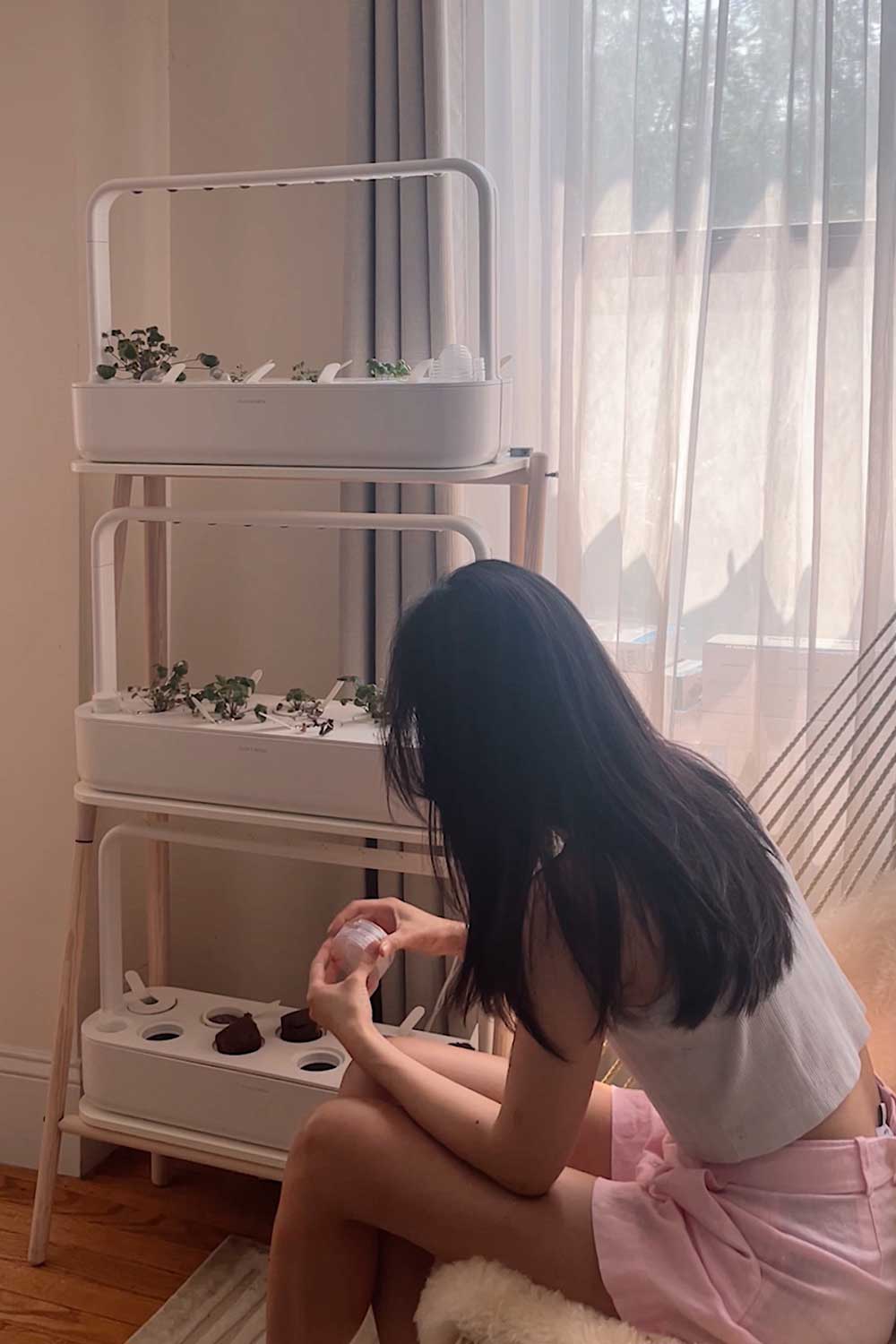
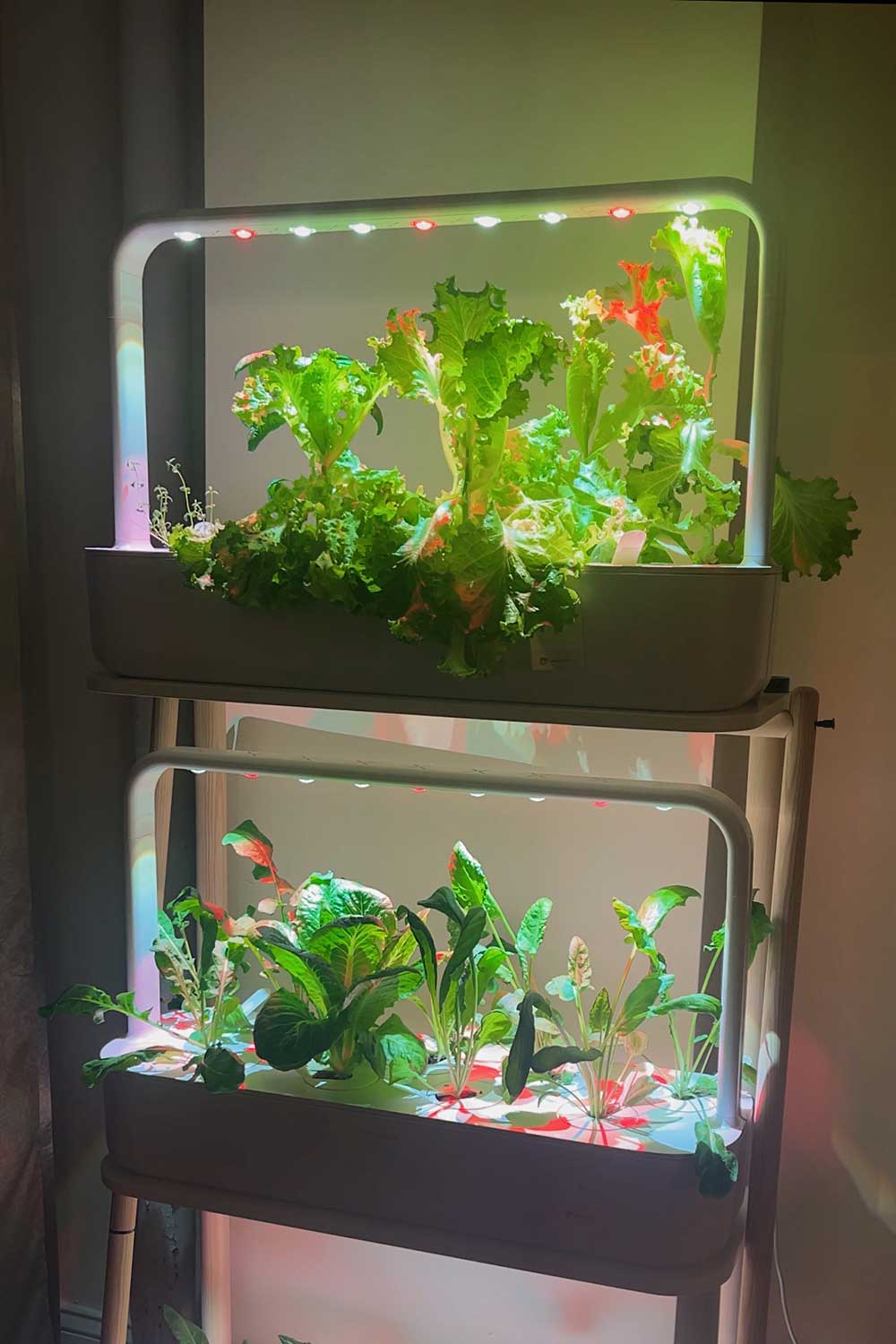
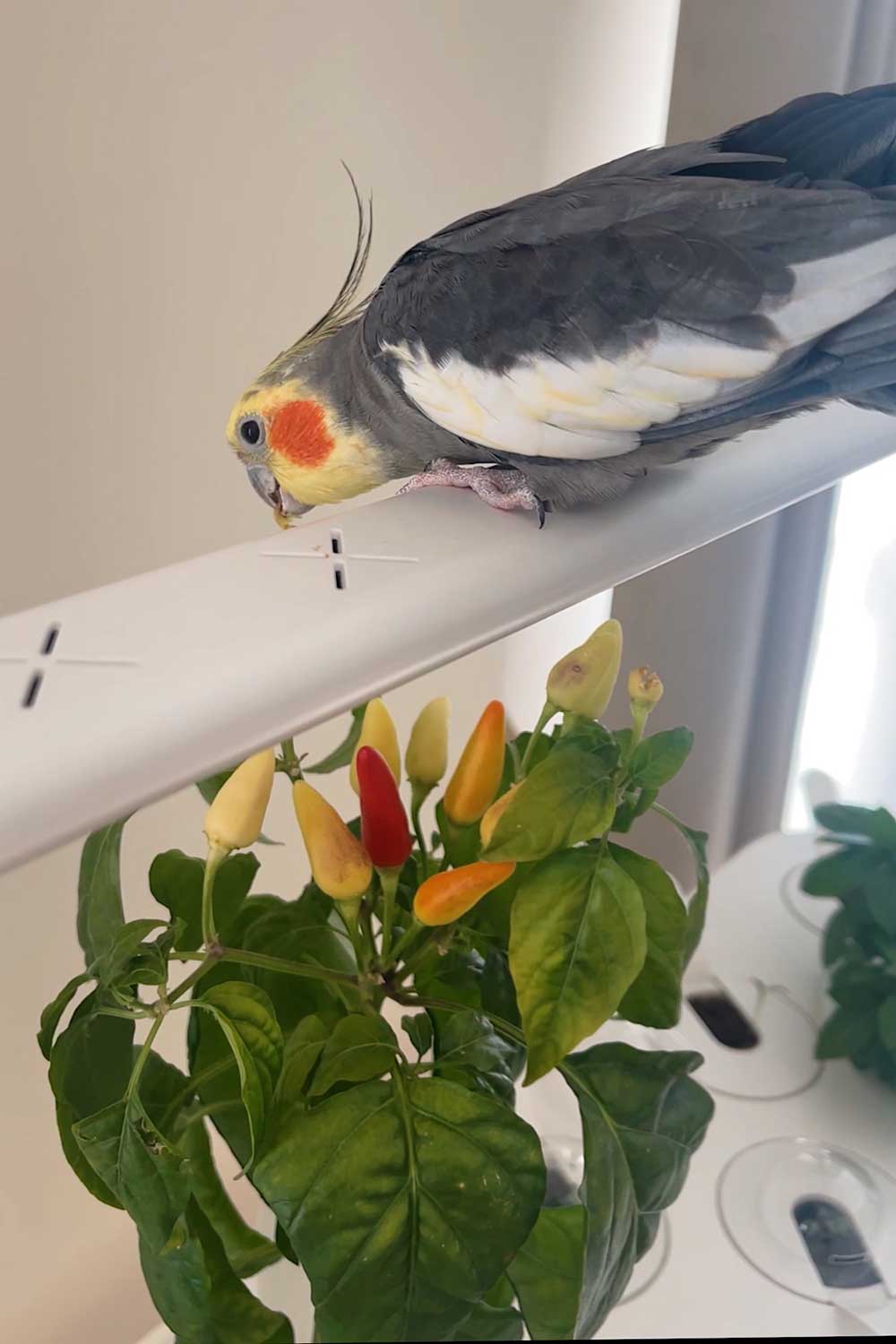
the Click & Grow is the prettiest vertical indoor garden – the design of the garden, the lights are a subtle soft hue and the cords are hidden
Cons
If you like to tinker and experiment, I think there are other systems better suited to that.
The Click & Grow works best if you stick to their ecosystem of plant pods.
Gardyn Studio 2
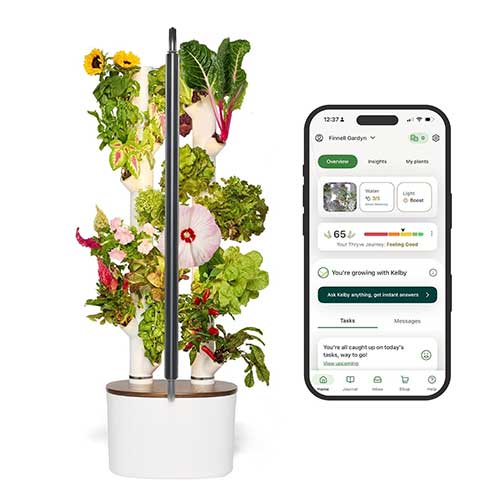
The Gardyn Studio is the more compact version of Gardyn’s flagship system.
It’s perfect for small kitchens, studio apartments, or as a first hydroponic garden.
It has the ability to grow around 16 plants using only ~1.4 sq ft of floor space.
So it’s a great option for people who want fresh herbs and greens without committing to a full-size system.
With built-in LED lighting and a self-contained reservoir, the Gardyn Studio makes it easy to maintain Asian greens, lettuce, beans, and more year-round without soil or sunlight.
It’s also a smart, fully automated system with lighting, water, and care reminders via the mobile app.
You can order plants on subscription, or use your own seeds.
I always prefer to grow using my own seeds and have written a couple tutorials on how to do that here and here.
Tower Garden
Shop at: Tower Garden
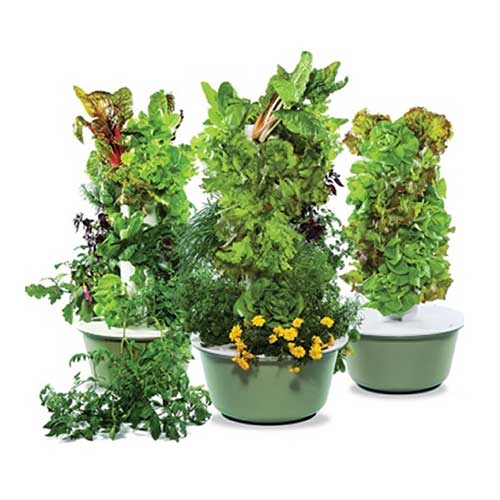
For a serious workhorse, the Tower Garden packs commercial grade aeroponic technology.
Plus, it works both indoors and outdoors.
(Indoors, you’ll need to buy their grow lights or obtain your own lighting)
Aeroponics is a variation on hydroponics.
It still uses just water – no soil – but instead of perpetually submerging plant roots in the nutrient solution, the roots grow free floating into air.
Nutrient solution is misted over them on a timed schedule.
This provides greater oxygen to the roots and also dramatically reduces water usage.
Pros
If you have ambitious indoor gardening plans and want to grow the most food per square foot, get the Tower Garden.
It can hold up to 32 plants on its vertical tower layout and can be used both indoors (with additional grow lights) or outdoors.
The Tower Garden is big and sturdy, and can be used to grow extra large vegetables like cauliflower, cabbage or squash.
Most indoor hydroponic towers don’t have the light strength or space to grow such large vegetables, so that’s a unique selling point of the Tower Garden!
Cons
Personally, I think the Tower Garden works best as an outdoor only option.
It’s quite a large, bulky tower so you could use it inside something like a garage or basement, or outdoors in a backyard or on a deck.
I think it’s a bit too bulky for a small apartment or condo. Indoor use also requires purchasing their grow lights, which add extra bulk.
Like the Farmstand, the Tower Garden has a single shared water reservoir at the base, so it’s best used to grow all of the same type of plant on the entire tower.
Lettuce Grow Farmstand
Shop at: Lettuce Grow & Amazon
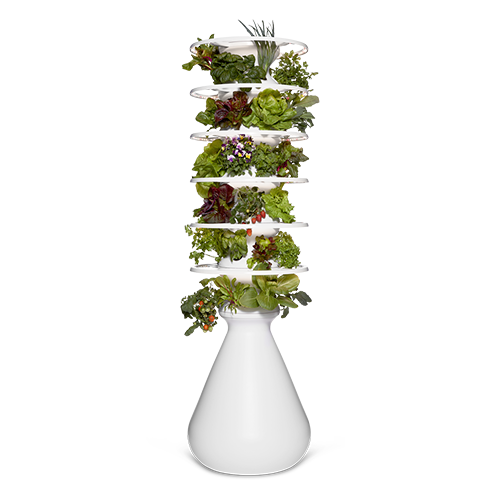
The Farmstand is one of my favorite hydroponic gardens.
It’s modular, so you can start small with 2 or 3 tiers, and then add more as you wish.
I started out with 4 growing tiers, which can grow up to 24 plants, and quickly fell in love with it.
I now have the fully-maxed out Farmstand at 6 tiers and 36 plants and it allows me to grow 360° in a very compact 4 square feet.
The Farmstand is like an ebb and flow hydroponic system, where the roots stay suspended in air,
The water pump shoots the nutrient solution from the base all the way up to the top, flooding all the plant roots, according to the timer you set.
I find this method of water recirculation incredibly efficient, and the Farmstand is excellent at growing leafy greens, herbs and small vegetables.
Lately, I’ve been experimenting with edible flowers, which is a really charming addition.
Read more: 1 Year with the LG Farmstand: All the Pros & Cons!
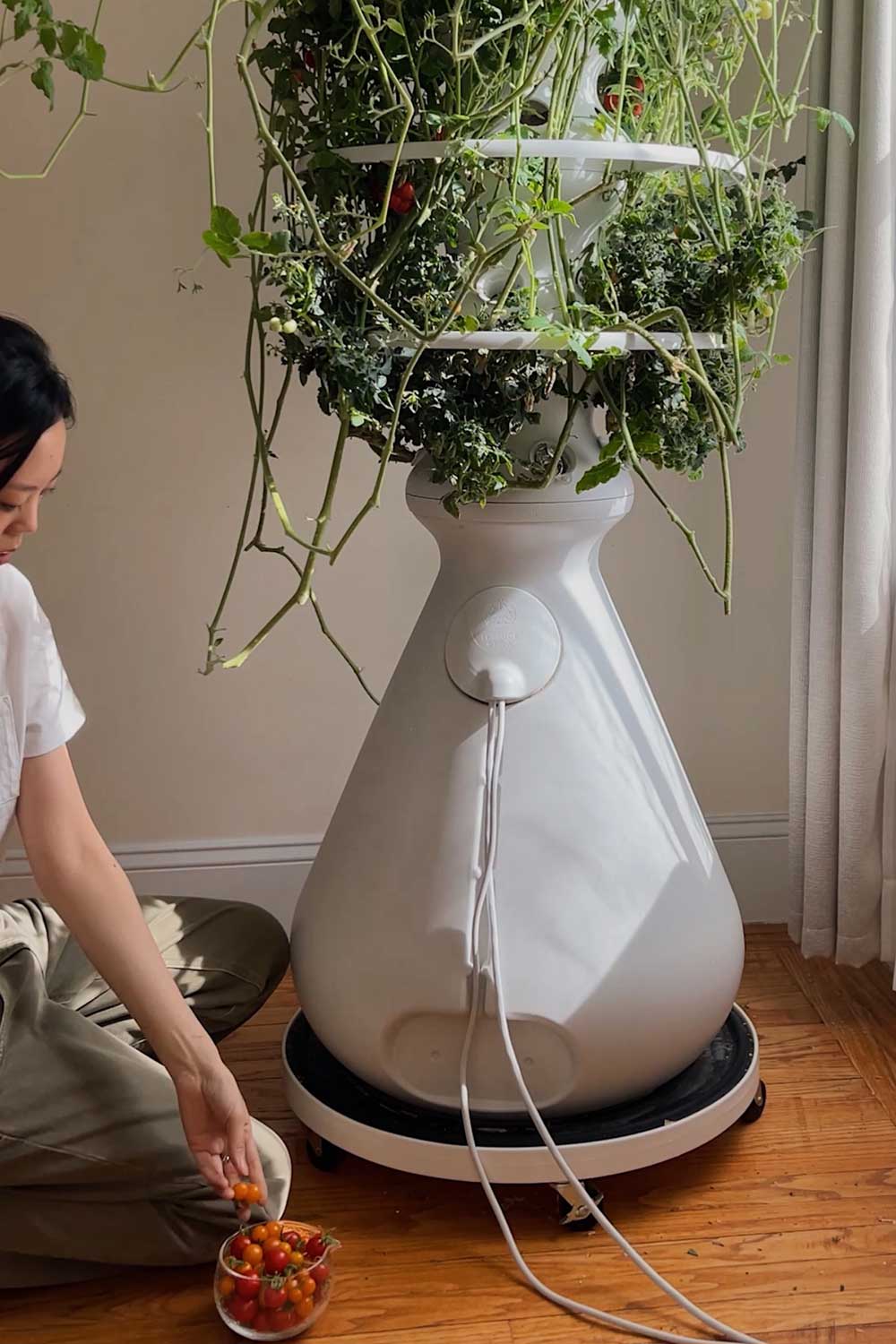
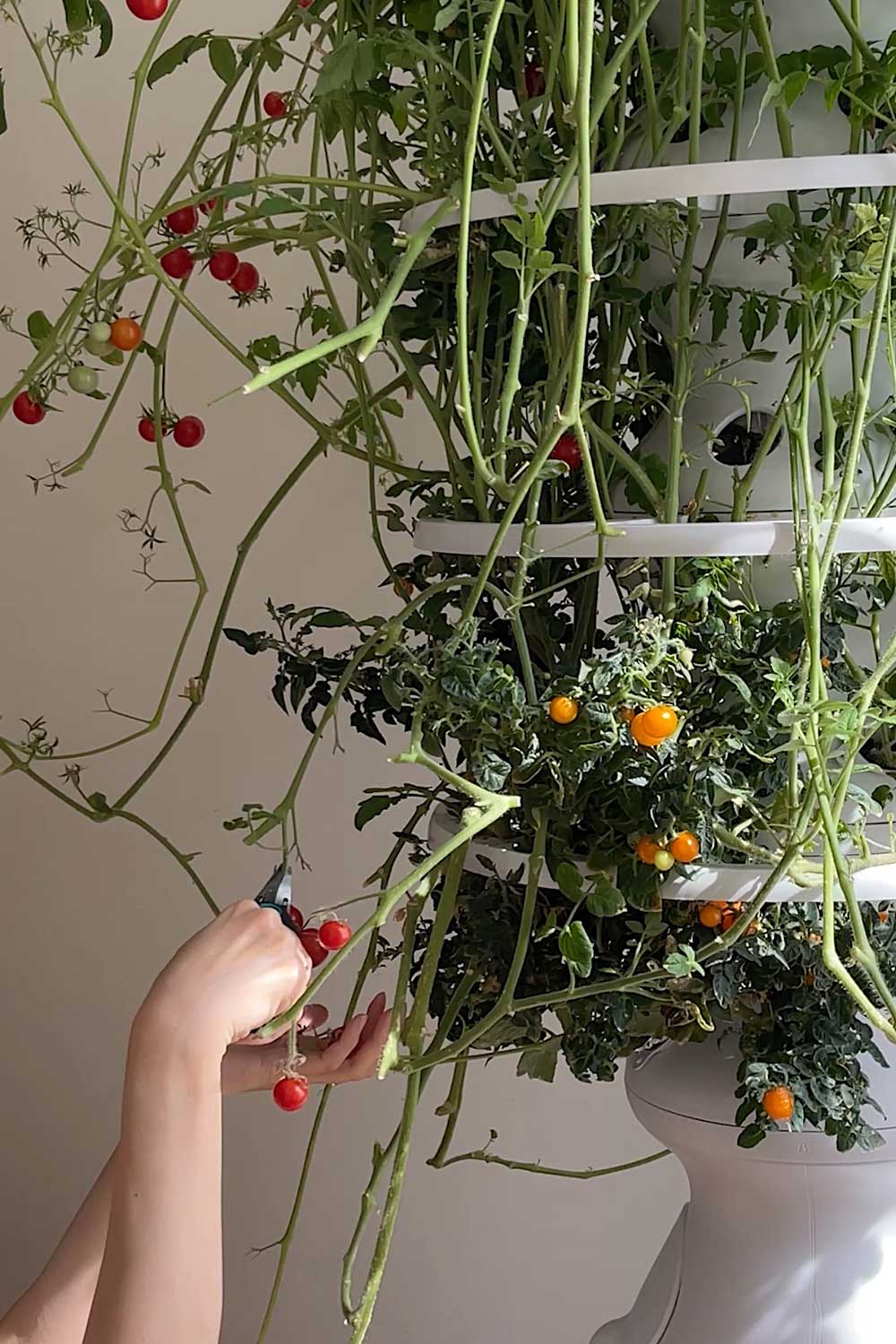

I recommend getting a water mat and dolly so you can easily rotate the tower 360 degrees. in this round, I planted an entire tower of these juicy cherry tomatoes
Pros:
With such a large water tank at the base, I find that the Farmstand can go the longest without refills.
The modular, stackable design makes it convenient to start small and expand later.
The indoor lights are also sleekly integrated and quite powerful – with the Farmstand, I no longer need living room or kitchen lights.
It practically lights up half my apartment!
It’s a true work of art in my home and without a doubt gets the most comments and questions whenever people come over.
I love how efficiently it allows me to maximize growing space in a small NYC apartment and it’s beautifully designed and easy to assemble.
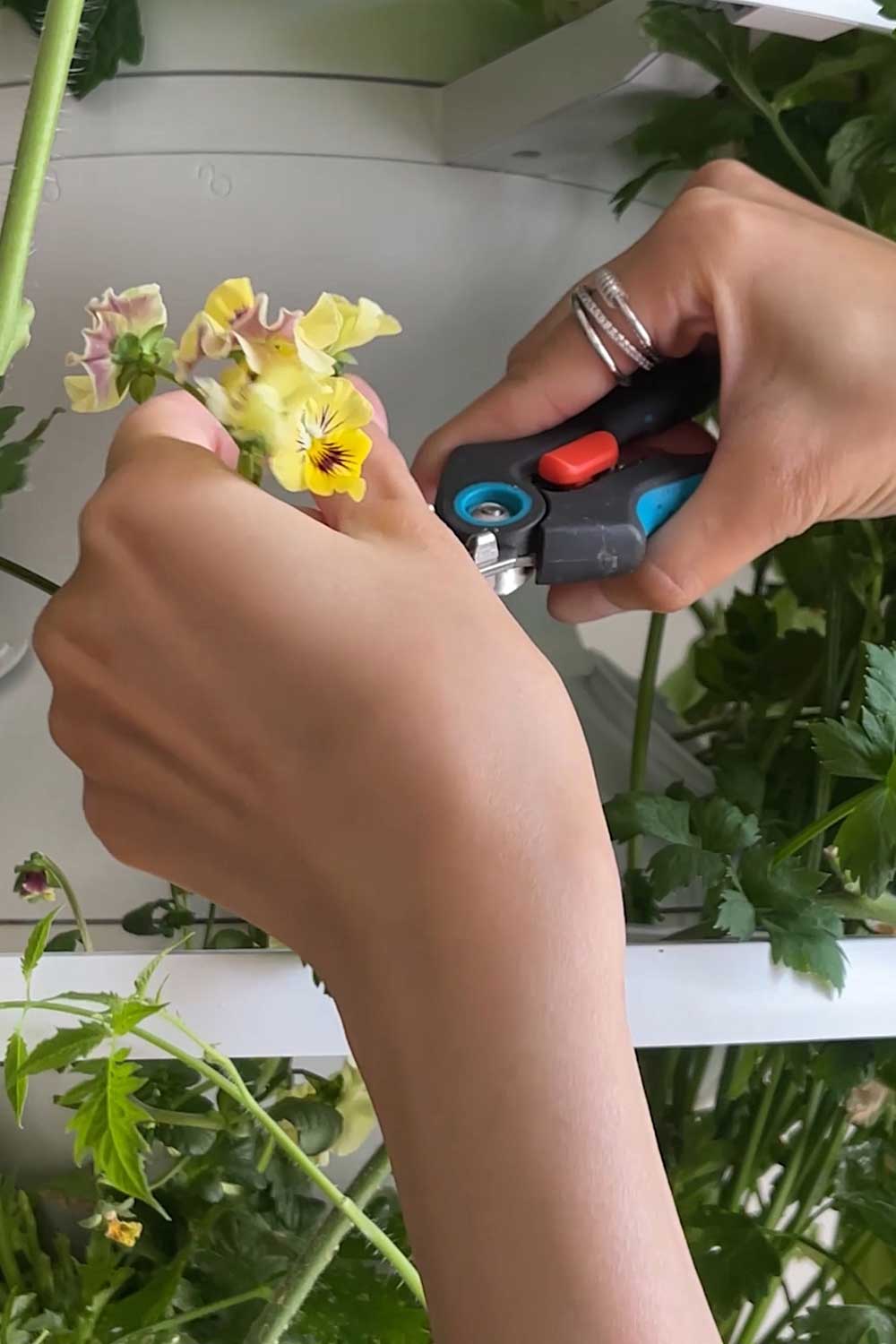
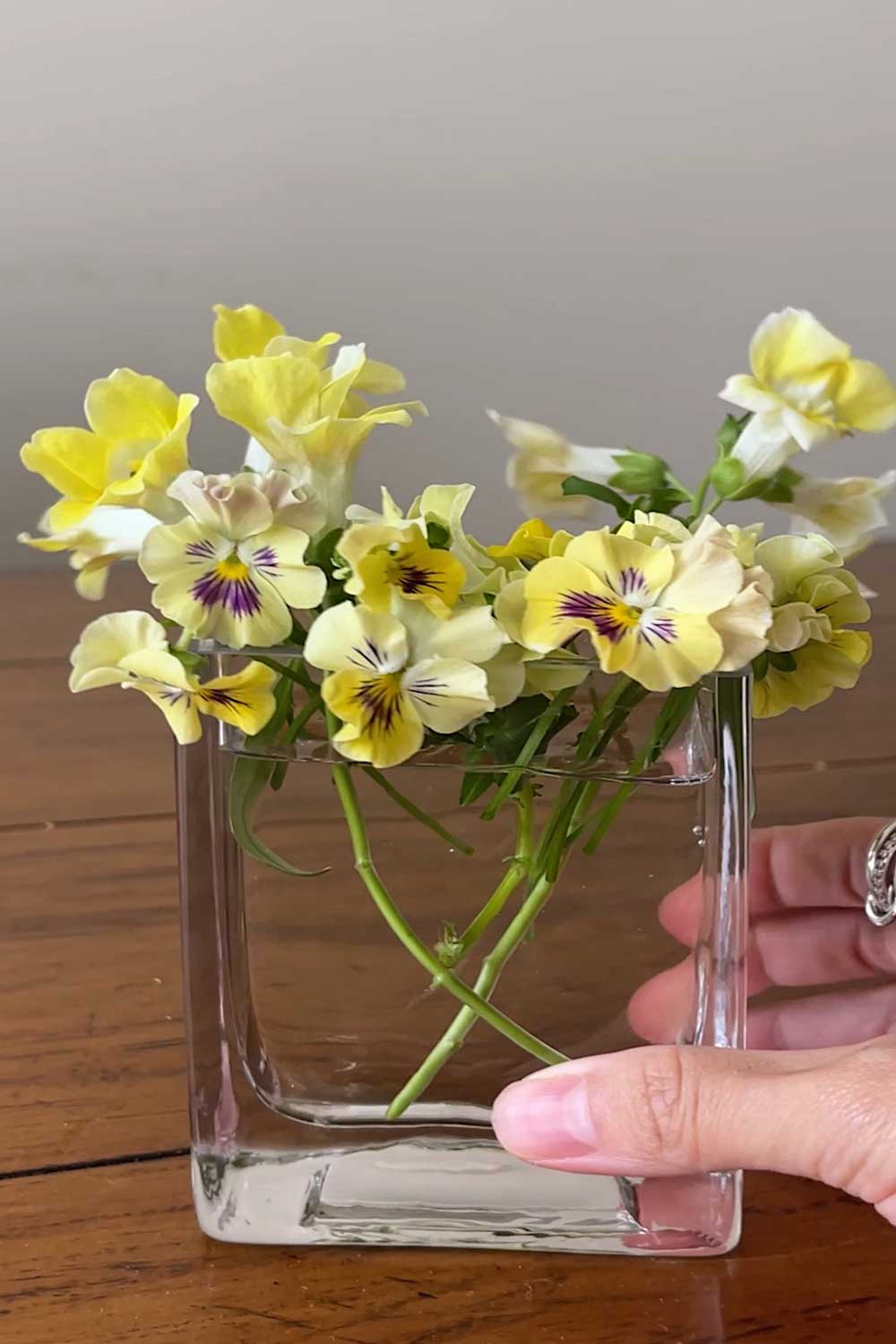

my latest fixation: growing cute flowers to make weekly mini bouquets! these are edible violas
Cons
With one shared water reservoir, the Farmstand works best if you grow the plants with the same nutrient profile throughout the entire tower.
It’s also best used at full capacity.
All of the lights and the water are controlled together, so if you got busy and only wanted to grow 1 tier / 6 plants, you’d still be powering up the entire Farmstand.
I calculated exactly how much my indoor gardens add to my electric bill in this post previously, if you want to know!
Aerogarden Farm XL
Shop at: Amazon
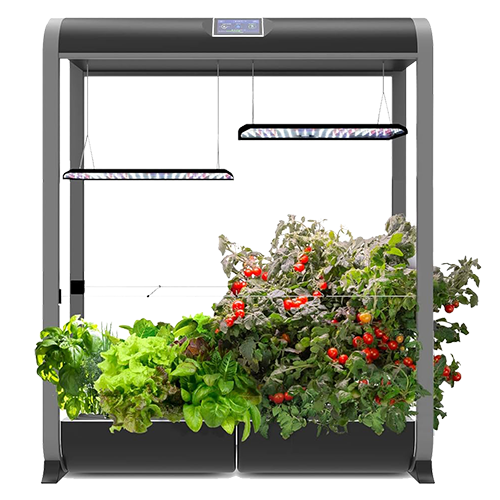
The Aerogarden Farm is one of my favorite vertical indoor gardens.
In fact, I like it so much I bought it not once, not twice, but three times!
I have them all placed side by side in my living room to create a ‘living’ wall of produce.
It adds some brightness and greenery to the darkest section of my apartment.
It also just brings me a lot of joy (and gets lots of questions from visiting friends and family).
Aerogarden is the OG manufacturer of indoor gardens.
In the years that I’ve been growing vegetables indoors, I’ve never seen a comparable product to the Farm XL from any other brand.
It’s incredibly unique!
The Farm comes in a couple different sizes:
- 2 widths: the Farm 12 and Farm 24
- 3 heights: the Basic (12″), Plus (24″) and XL (36″)
I’m specifically recommend the Farm XL, either in the 12-pod width or 24-pod width.
That’s because the Farm XL provides 3 feet of grow height, which is crucial when you want to grow large vegetables.
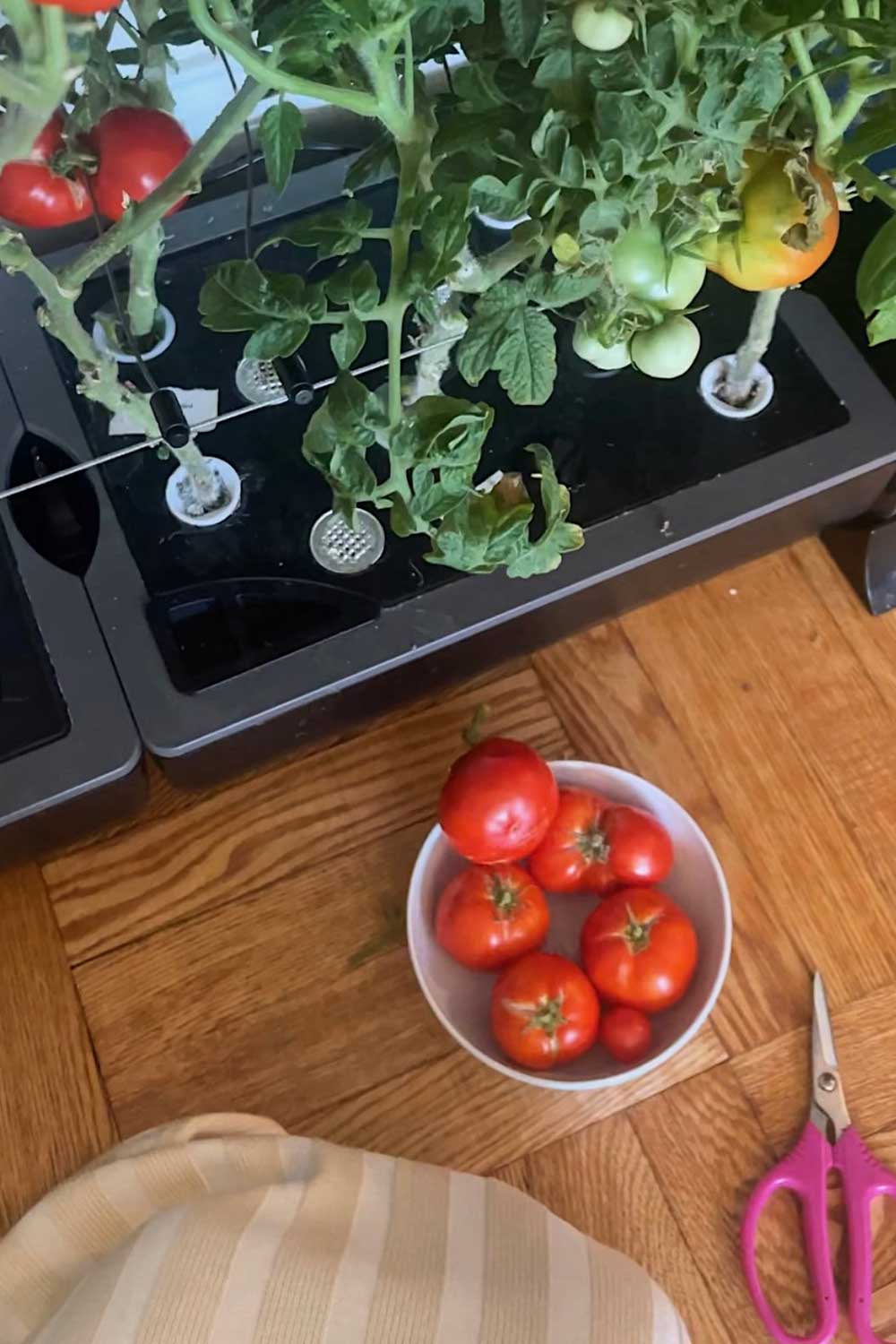
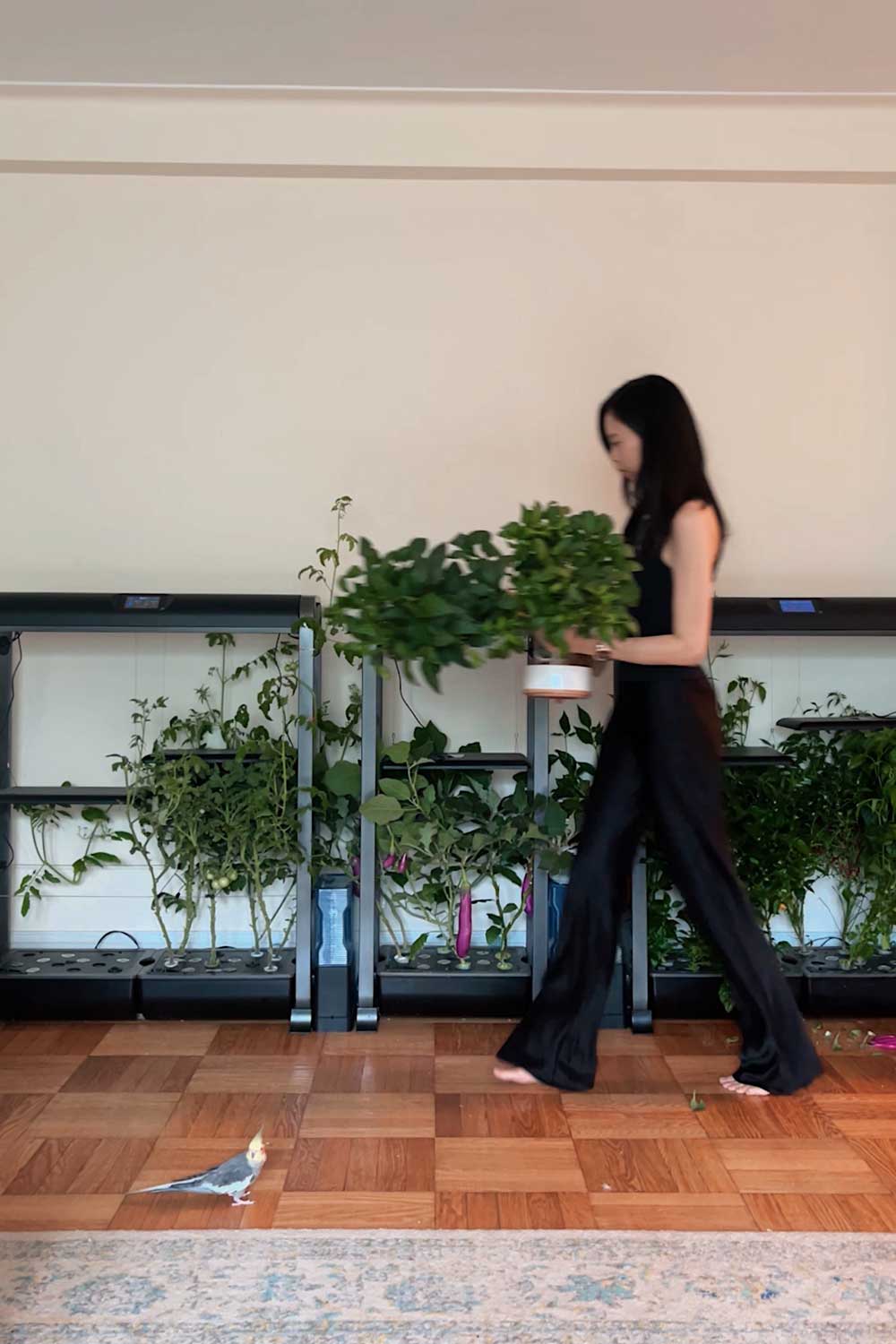
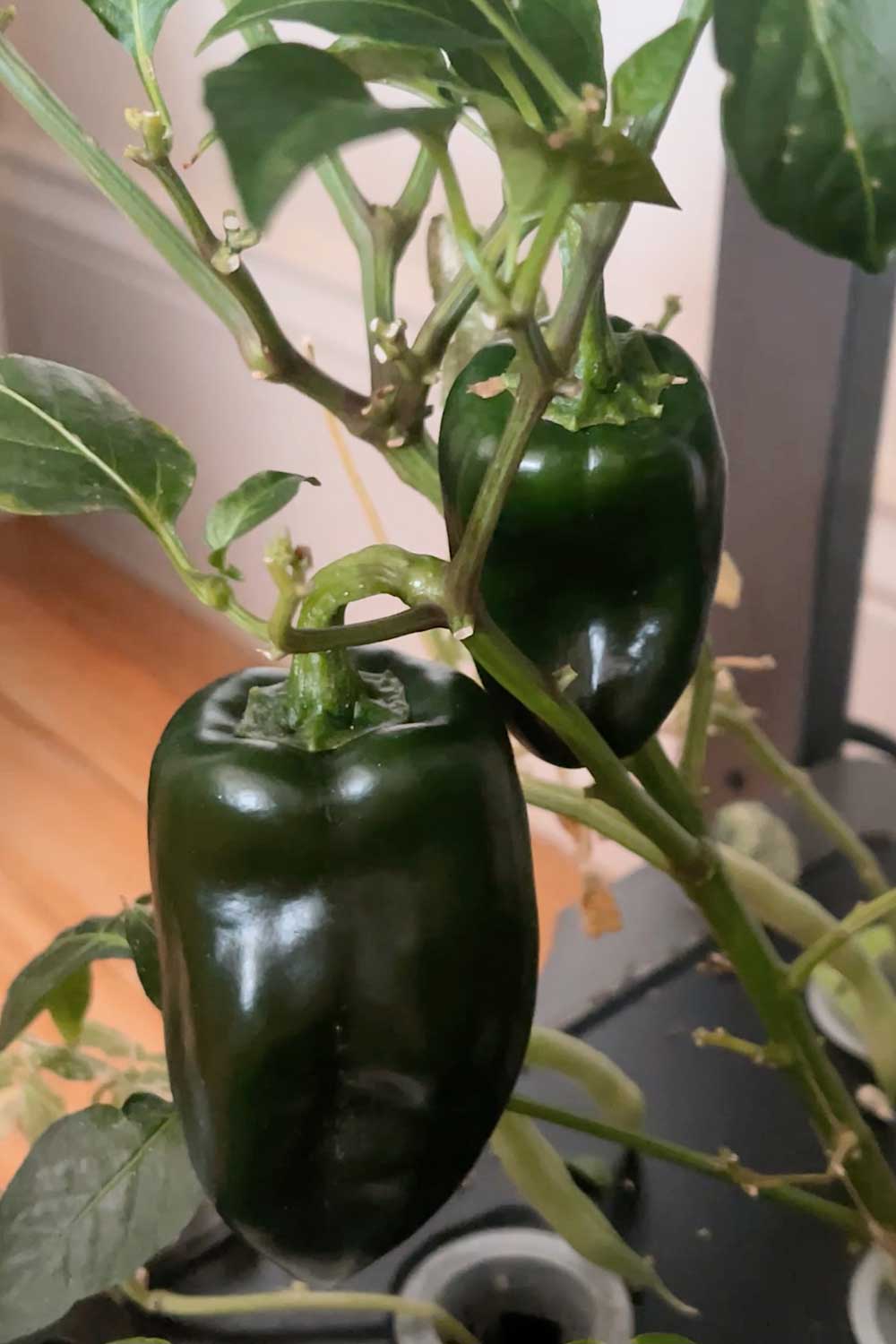
my indoor garden wall where I grow all my large vegetables!
Pros
I’ve grown full size tomatoes, peppers and eggplants in this, which would be more difficult to do in many other indoor gardens with less height capacity.
The Aerogarden Farm comes with built-in LED grow lights, a touch screen LCD display panel so you can easily adjust the settings and a x water reservoir.
In particular, I love the ability to fully customize the light setting.
With Aerogarden you can program the garden lights to turn on and off exactly when you want them to.
Many systems only allow you to customize the start time and have a built-in light duration of say, 15 hours, whereas the Aerogarden Farm allows for full flexibility.
It also has a ‘sunrise and sunset’ mode, so the lights gradually turn on and off mimicking the sun.
And, best of all the Aerogarden Farm has a feature called ‘vacation mode‘.
It allows you to go on vacation, leave your indoor garden and come back to healthy, thriving plants when you return.
I’ve successfully taken 3-week long trips away from home using vacation mode!
The Farm is a large machine and designed to sit on the floor.
They can also be stacked vertically, one on top of the other. You just need to pick up the mounting kit and you can have a double height layer of Farms!
It also comes with trellis supports, which are really helpful when growing vining plants like beans and cucumbers.
Finally, the Farm 24 XL is split into two garden reservoirs of 12 plants each.
This gives you more flexibility than if the garden had just one reservoir of 24 plants.
Different plants have different nutrient requirements and grow at different speeds.
So by bifurcating the garden you can tailor the light and nutrient schedule and make the most of your grow space.
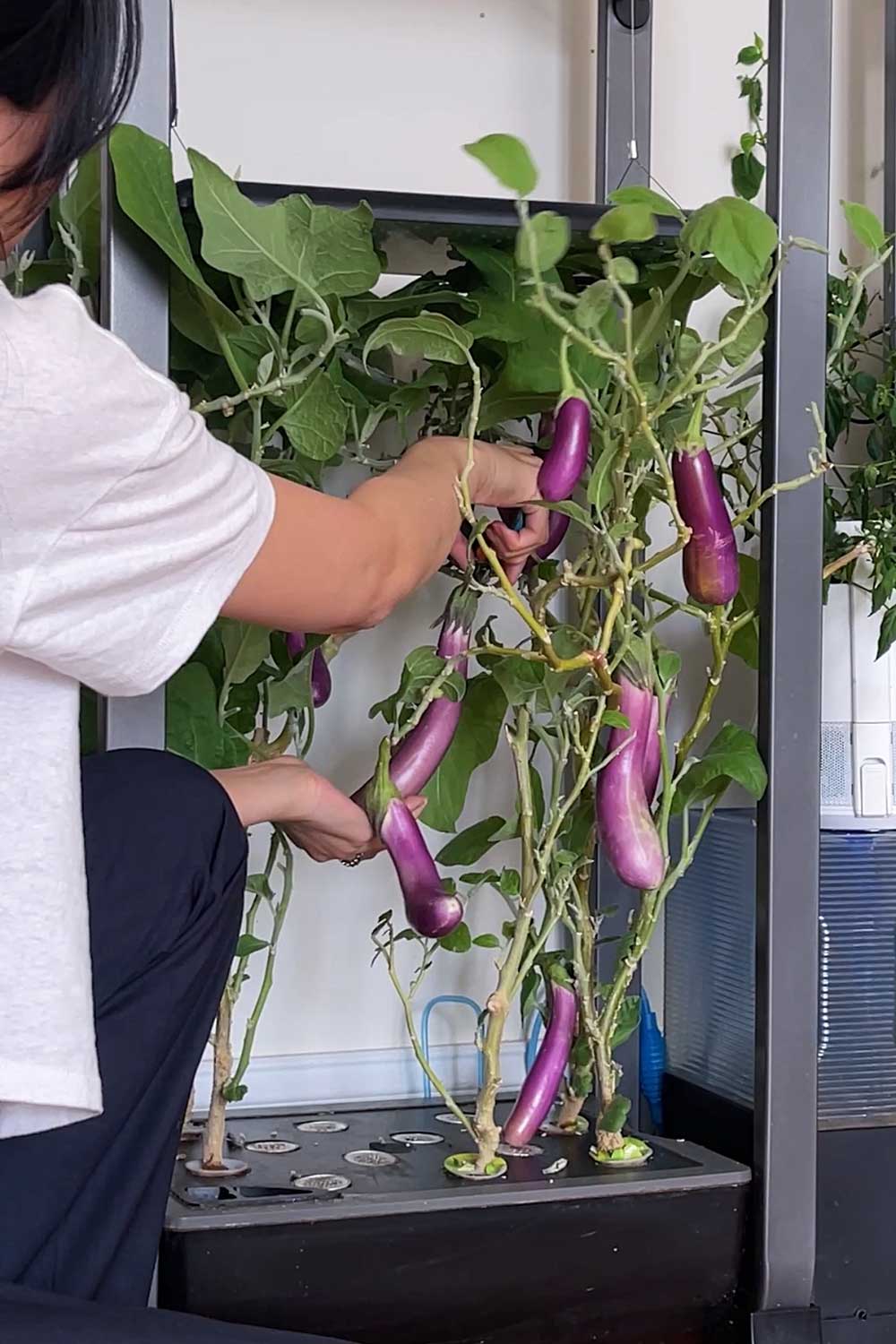
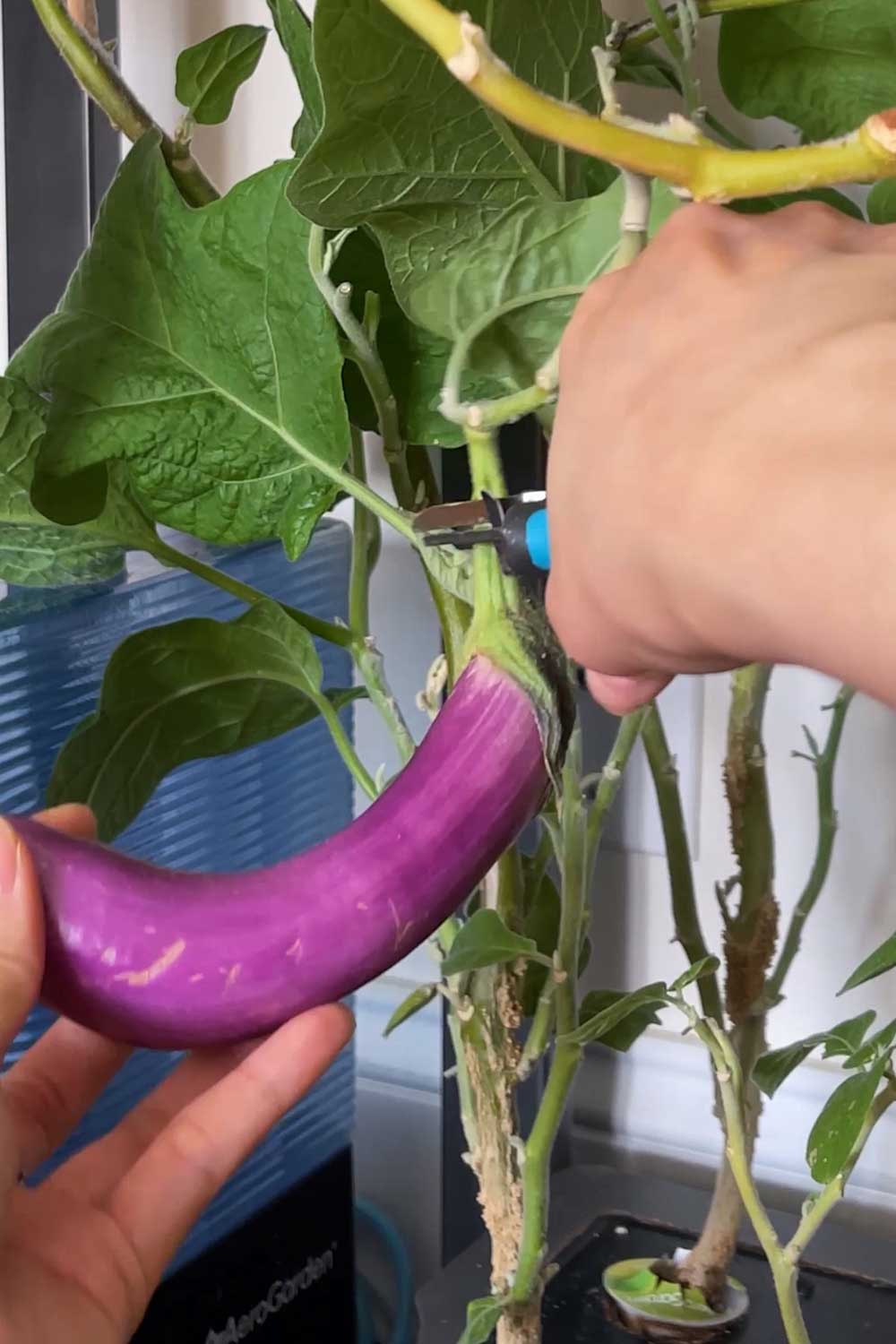
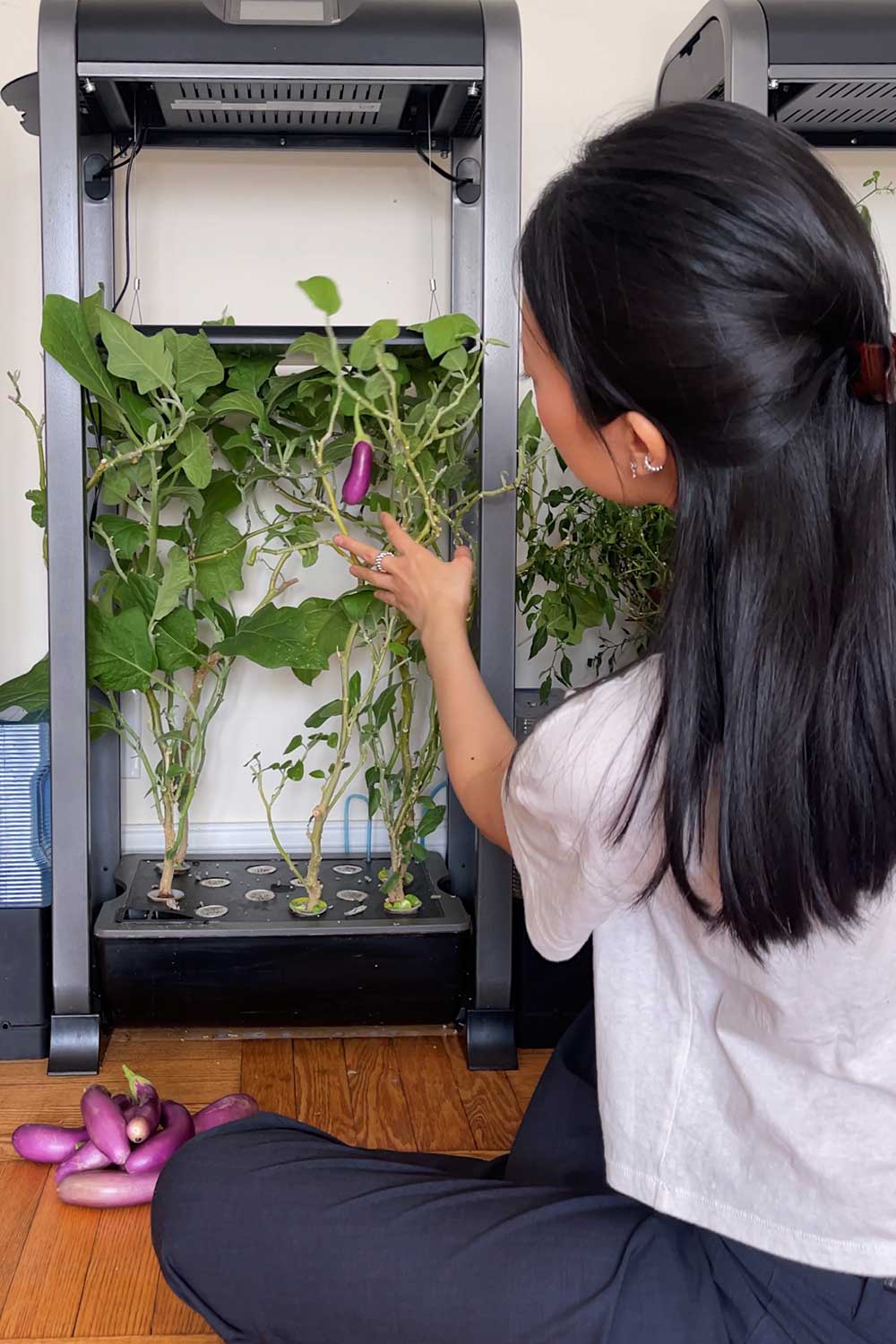
the volume of produce I can grow in my Aerogardens is a lot! obviously a farmer with acres of land outdoors can grow more, but for a small NYC apartment I think this Japanese eggplant haul is pretty good!
Cons
The Farms do require some assembly.
I hate setting up furniture and found this to be a bit of a pain, but I have a video guide here and setup tips here that cover the process in more detail.
When the Farms first came out many years ago, they were quite expensive (~$500-750).
But in 2026, they’ve come down in price a lot ($225-350) so in my opinion, price isn’t really a con anymore!
Of course, these Farms are more expensive than a small countertop indoor garden ($50-150), but for the size, features, specs and high-quality build, I think they’re great value.
They just sell out frequently, so if you see them in stock you should grab one!
Summer 2026 Update: Aerogarden is having a clearance sale on the Farms!
They’re 40% off plus an extra 15% off with their discount code! So you can snag an Aerogarden Farm for $178 which is a steal!
That’s basically cheaper than the price of an Aerogarden Bounty – unheard of!
Rumors are saying that Aerogarden will be launching a new product soon, which is super exciting.
Lettuce Grow Nook
Shop at: Lettuce Grow & Amazon
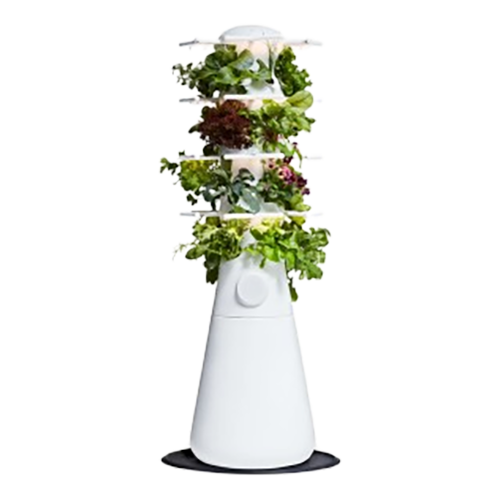
The Lettuce Grow Nook can grow up to 20 plants in just 2 square feet (compared to up to 36 plants in 4 square feet with the Farmstand).
While you have to purchase the circular LED lights to use the Farmstand indoors, the LED lights come included with the Nook.
This makes for a more compact, sleeker hydroponic tower.
It’s easy to tuck the Nook into a breakfast nook or small kitchen corner – I guess that’s why they call it the ‘Nook’ ha.
I’d recommend this hydroponic tower for a renter, city dweller or anyone with limited growing space but big growing ambitions.
Cons
The Nook uses slimmer, smaller integrated LED lights that are best suited for herbs and leafy greens.
If you want to grow large vegetables, I’d recommend the Aerogarden Farm XL or Lettuce Grow Farmstand.
The Indoor Gardening Guide
Cyclosporiasis, e.coli — whatever outbreaks affect grocery produce hasn’t phased me
…because I grow my own clean, pesticide-free lettuce!
If you’re looking to start an indoor garden, I’ve written down my exact process for growing herbs, leafy greens and fruiting vegetables in my ebook:
Go from black thumbs to flourishing indoor gardener! See a sneak peek inside here
What to Look for When Buying a Vertical Indoor Hydroponic Garden
And finally, some considerations when it comes to choosing the right hydroponic tower for you.
Not all vertical hydroponic systems are created equal. Before choosing one, here are some things to consider…
Size, Footprint & Plant Capacity
Vertical gardens vary widely in height, width, and the number of plant sites they offer.
Ask yourself:
- How much floor space do I realistically have?
- Do I want a compact system or a high-capacity grow tower?
- Will I want to expand my system later?
Some systems are designed to grow a handful of herbs, while others can support dozens of plants at once.
Bigger isn’t always better – especially if you’re new to hydroponics.
Lighting Quality & Coverage
Lighting is one of the most important components of any indoor hydroponic garden.
Look for:
- Full-spectrum LED grow lights
- Adjustable light height as plants grow
- Even light coverage from top to bottom
Poor lighting can lead to leggy plants, slow growth, or low yields.
I find that in this, you get what you pay for.
There are lots of inexpensive, non-branded vertical hydroponic systems on Amazon.
Most of these have poorly designed lights.
I initially bought some to try (it’s hard to resist a ‘deal’!) but my plants either never grew, grew stunted or the lights died after a couple months.
So I’d stick to the tried-and-true brands I listed above instead of cutting corners.
Ease of Setup & Maintenance
If a system is difficult to assemble or maintain, it’s more likely to end up unused.
Consider:
- How long setup takes
- How often the water reservoir needs refilling
- How easy it is to clean
Some systems are nearly “plug-and-play,” while others require more hands-on involvement.
Plant Variety Compatibility
Most vertical hydroponic gardens excel at growing:
- Leafy greens (lettuce, spinach, kale)
- Herbs (basil, mint, cilantro)
Not all systems handle fruiting plants equally well.
If you want to grow tomatoes, peppers, or strawberries, make sure the system can support heavier plants and taller growth.
Cost & Ongoing Expenses
Beyond the initial purchase price, factor in:
- Seed pods or seedlings
- Nutrient solutions
- Replacement parts (lights, pumps, filters)
- Electricity usage
Some systems cost more upfront but save money long-term by allowing you to use your own seeds or generic nutrients.
Are Vertical Hydroponic Gardens Worth the Investment?
For me, yes.
If you value convenience, consistency, and fresh food, an indoor garden is priceless.
US agricultural standards are lax and poor when compared to Europe.
Just recently, the Environmental Protection Agency approved new pesticides that contain PFAS ‘forever chemicals’.
Meanwhile, new research has come out identifying overhead irrigation sprays at grocery stores as a major source of E. coli outbreaks in lettuce.
I think now more than ever, it’s a great time to be growing your own organic lettuce, indoors and pesticide free.
Vertical hydroponic gardens tend to pay off when:
- You regularly buy fresh herbs or greens
- You want reliable indoor growing with minimal guesswork
- You enjoy harvesting food you grew yourself
- You don’t have outdoor space
- You don’t want to deal with dirty soil or bugs
While the upfront cost can be higher than traditional pots, the long-term value often comes from reduced grocery spending, higher yields, and a better growing experience.
Follow me on
Youtube | Tiktok | Instagram | Substack | ShopMy


Thanks for the great review! Question about all these systems: what type of plastic is used? Many systems use PVC and ABS instead of official food-grade plastic like HDPE and LDPE. Do any of these systems indicate the actual type in all of their components?
Author
yes lettuce grow is made from food grade recycled HDPE plastic. it’s also prop 65 compliant and BPA free. tower garden uses a food grade UV stabilized plastic as well.