Is it cheaper to grow your own food?
That’s something I always wondered before starting my own indoor garden.
A couple years ago, I didn’t really think twice about how much I spent on groceries, even though I live in NYC where everything is more expensive.
But lately… with 2026 prices climbing higher and higher every week, it’s something that could be meaingful!
Anyone whose shopped for wood and compost at the store will know that materials are also pretty expensive these days.
I was watching a video of a girl who built her own DIY chicken coop (it was really cute) but in the comment section, it came out that the materials alone were $1500 (!)
Not to mention her labor (it took her several weeks to build)
Likewise, high quality wood to build your own garden beds easily costs a couple hundred dollars.
Then you have to factor in the cost of soil and compost…
And you’re easily looking at $500 before you’ve even planted a vegetable!
So if growing outdoors is already an investment.. would indoor gardening be even more of a money pit?
It’s a question I get a lot!
Now that I’ve been growing vegetables inside my apartment for several years, I have a good idea of the costs involved.
Both how to save money on the upfront costs.. and which vegetables give you the best bang for your buck vs just buying at the store.
So I wanted to start a series on the economics of indoor gardening.
You can read part 1 here, where I covered the ROI of an indoor herb garden.
Today I’m looking specifically at the value of growing eggplants indoors.
Read more: How to Start an Indoor Garden
Do Indoor Gardens Save You Money?
This post is a continuation of my series on Indoor Gardening vs Groceries.
You can read my initial post here, which covers how to measure the value of a indoor garden, calculates the return on an indoor herb garden and compares which Aerogarden gives you the most bang for your buck.
For years, indoor gardening was just a hobby.
I found the process fun, and I especially liked growing ‘exotic’ vegetables.
In some cases, I grew things that were so foreign to me, I didn’t know what to do with them.
So I kept them on the counter until they rotted… and then threw them out lol.
RIP Chinese 5 color hot peppers
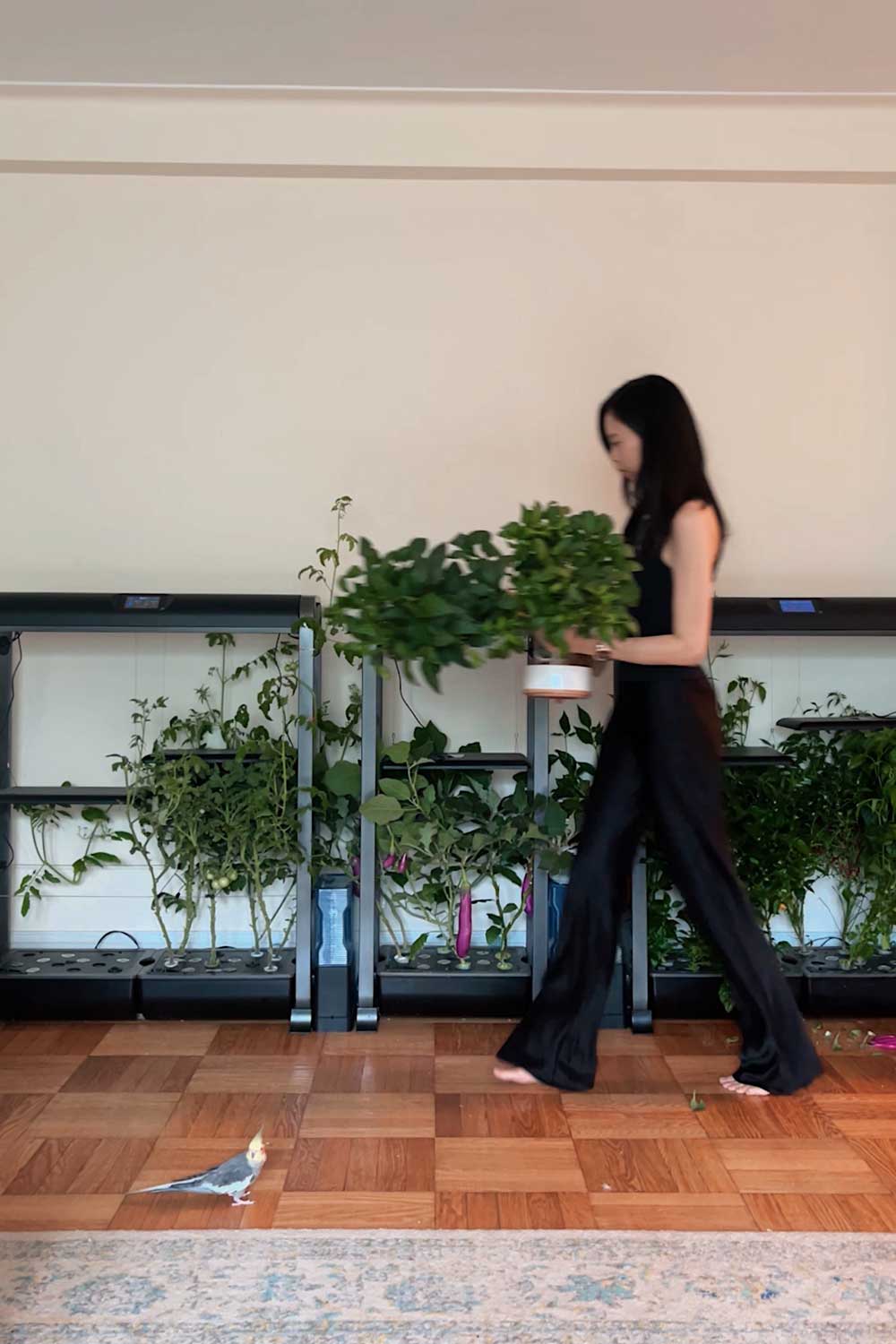
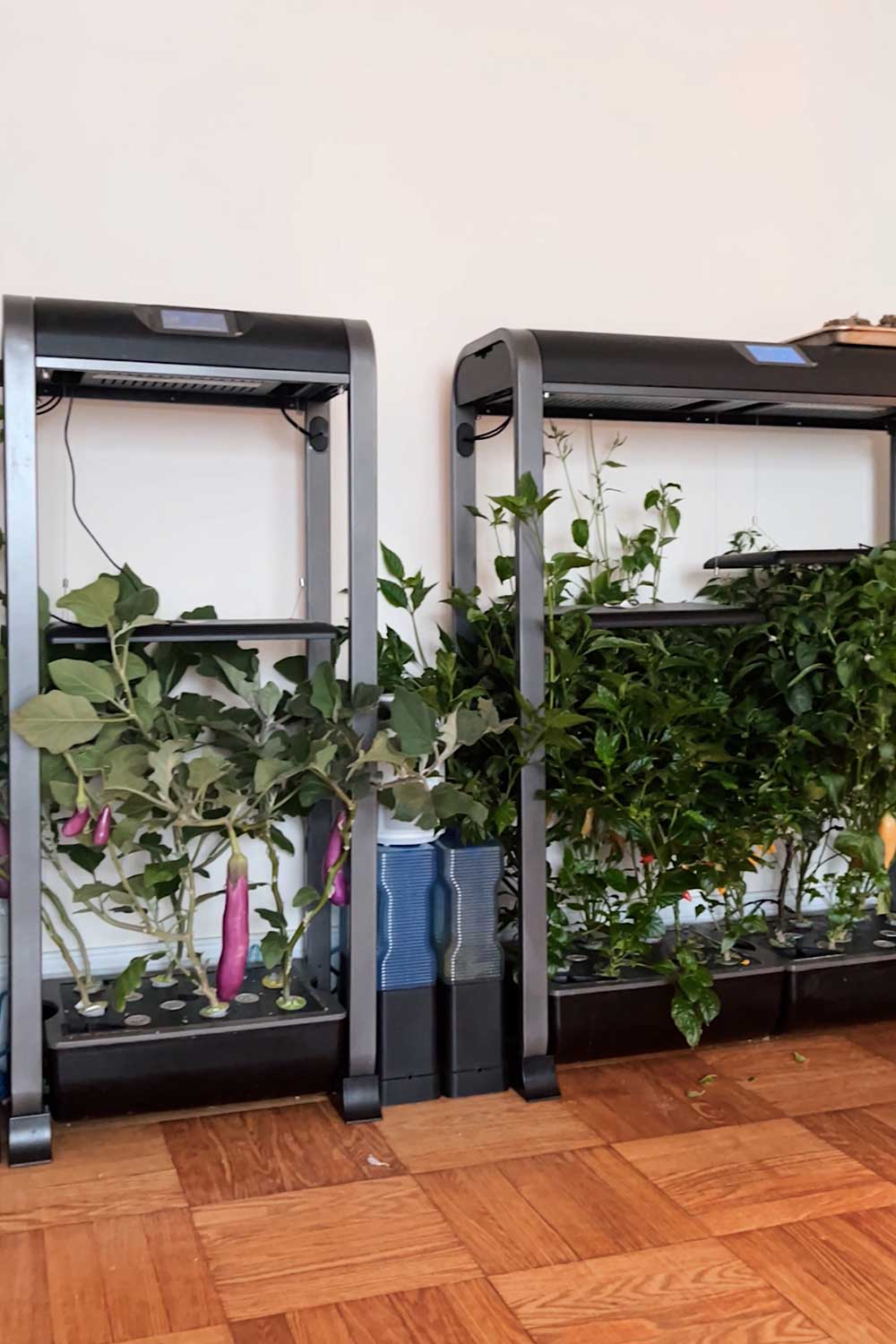
I typically grow eggplants in these floor gardens, but any large indoor garden would work!
Garden vs Groceries
But now that I actually eat my produce, I started wondering how much I’ve been saving vs the grocery store.
So today we’ll borrow a finance concept and apply it to gardening: return on investment or ROI.
As an excel junkie, I find that looking at my hobby from a return, cost and investment perspective gives me a good frame of mind for how to maximize space in my apartment.
In nyc, real estate is precious $$$!
Calculating the ‘return’ for various vegetable categories also helps me get a sense of what’s ‘worth it’ to grow at home compared to just buying at the grocery store.
And it helps me refine what seeds I buy and what garden space I allocate.
Ultimately, I’m trying to grow as much healthy, pesticide-free food as possible for the lowest reasonable cost!
Growing Hydroponic Eggplants Indoors
Eggplants are one of my favorite things to grow.
It’s partly a matter of pride – when I was first started to grow larger vegetables, eggplants gave me a lot of trouble.
So whenever I see one in my gardens now I feel a lot of satisfaction.
Eggplants are also so unique.
There are hundreds of fun eggplant varieties that you’d never come across IRL unless you grow them yourself.
My go-to seed companies for eggplants are:
- True Leaf Market (for asian eggplants)
- Ferry Morse (for classic eggplants)
- Renee’s Garden (for container eggplants)
- Botanical Interests (for heirloom eggplants)
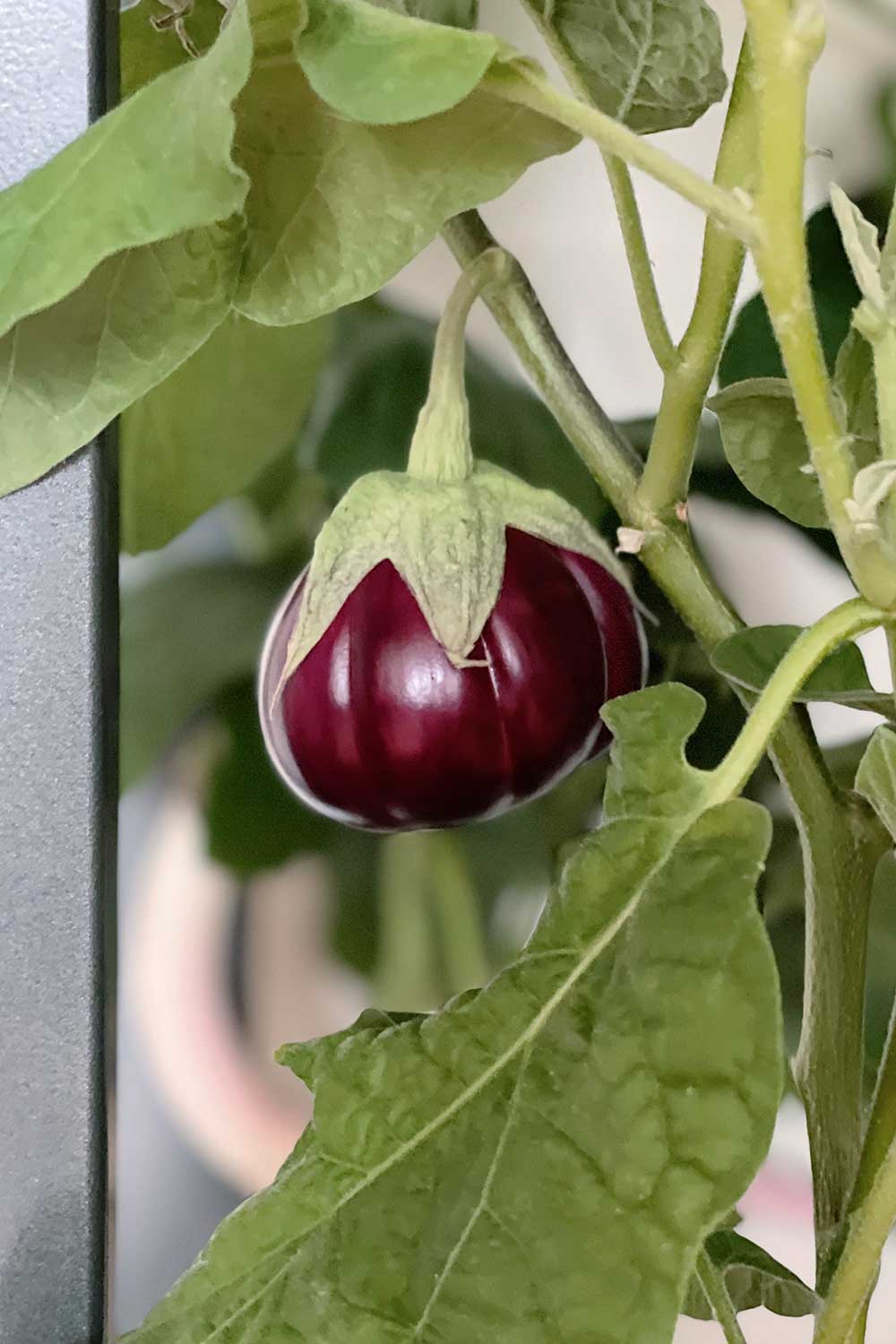
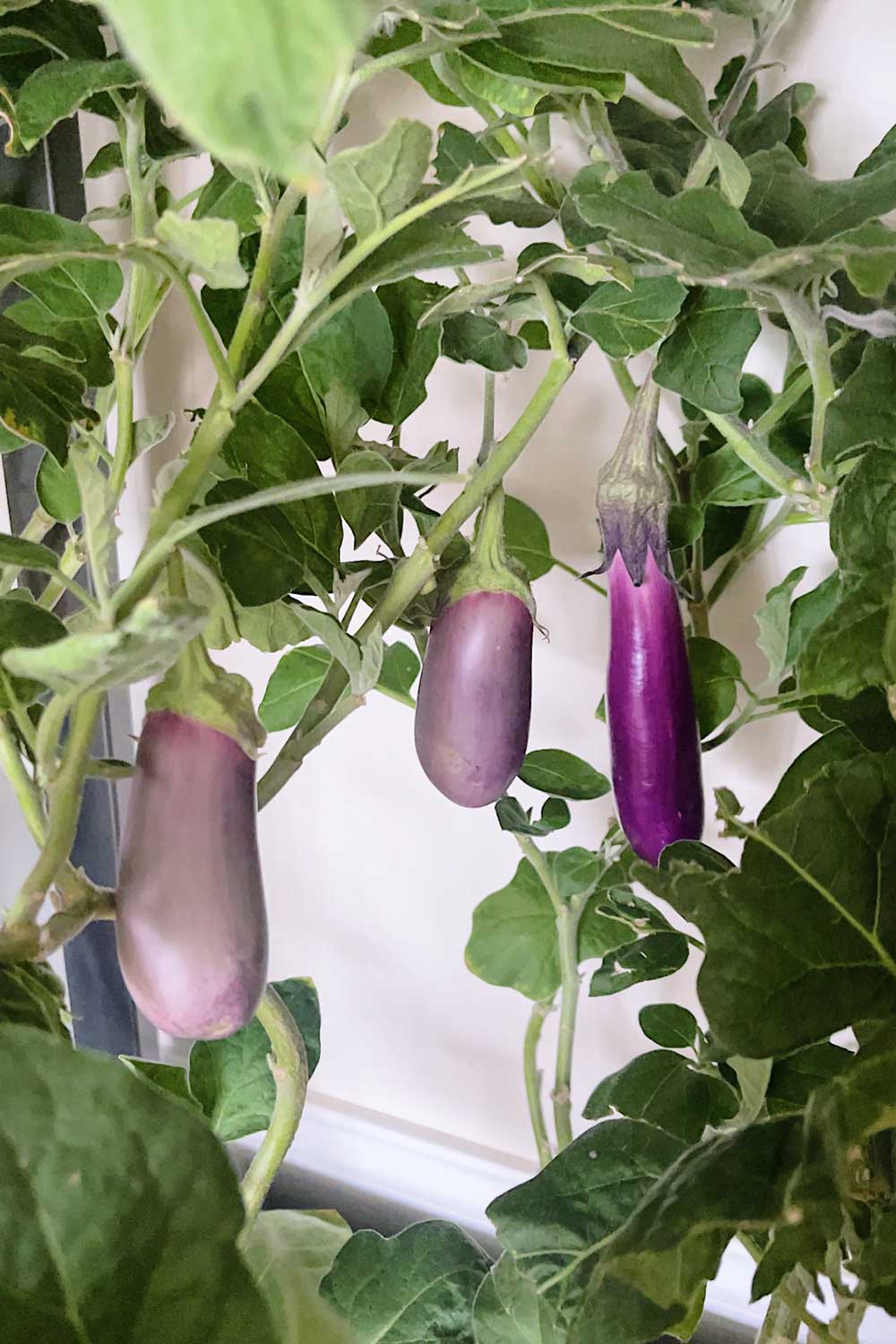
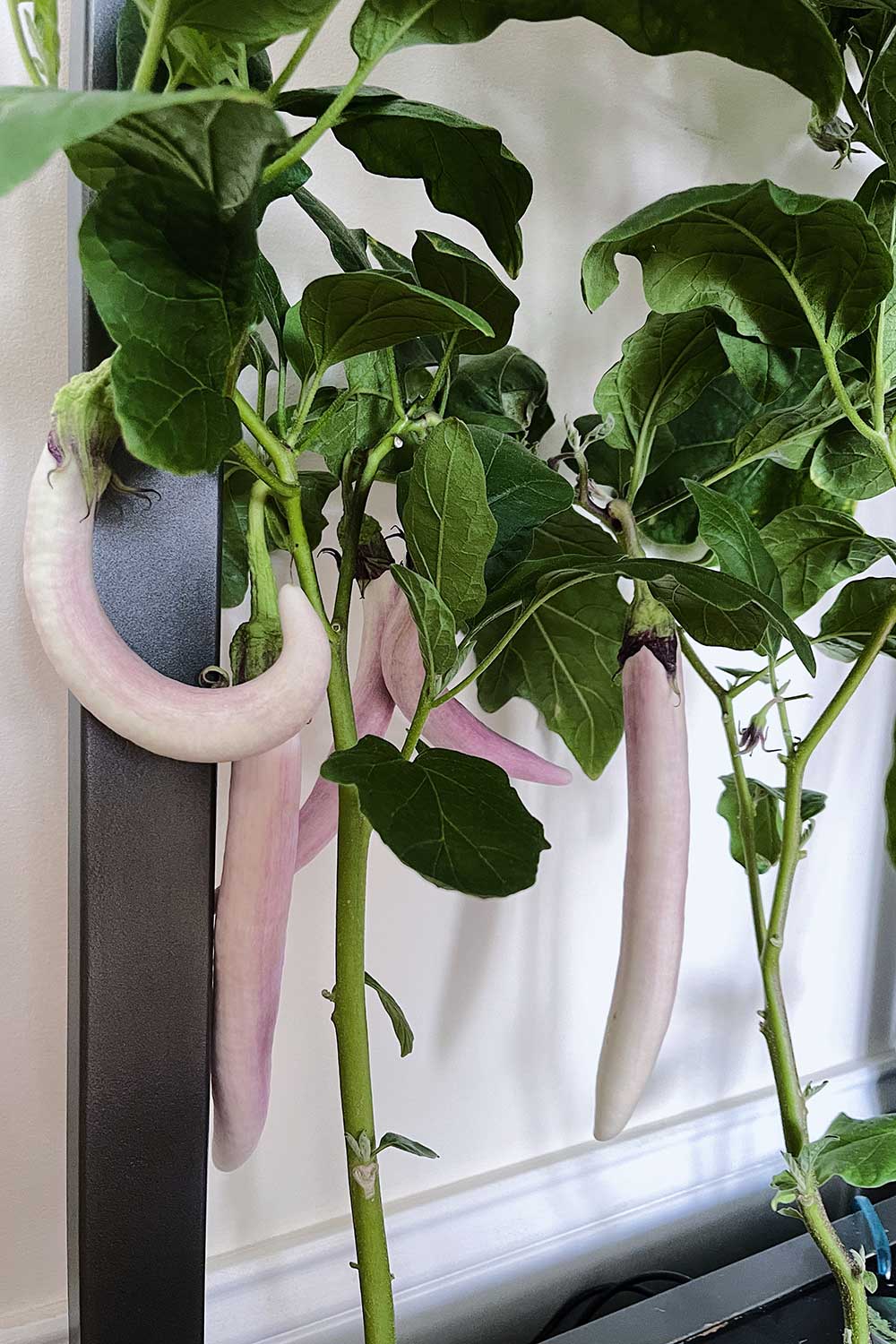
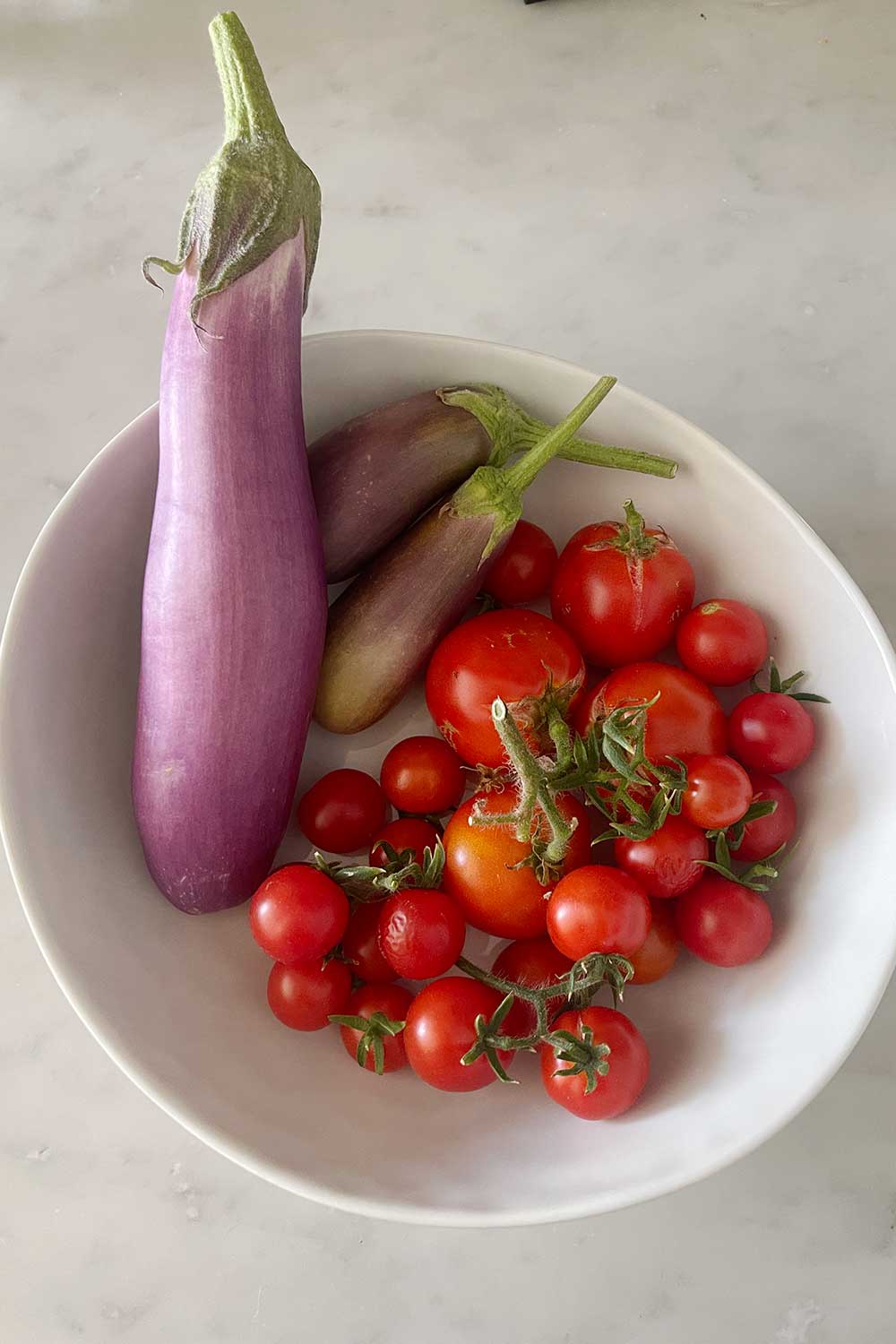
just some of the eggplants i’ve grown in my indoor gardens
In particular, I love
- these fun purple pumpkin ones
- these pretty stripped globes
- these dark Japanese types
I get another surge of satisfaction knowing that my homegrown eggplants literally aren’t for sale at any conventional grocery store.
And overall, the eggplant growing process is very satisfying, from start to finish!
Eggplant flowers are delicate and pretty – more so than any other vegetable flower.
Although eggplants can be hard to get going initially, once they produce, eggplants produce.
I’m overflowing in eggplants these days.
The Indoor Gardening Guidebook
I wrote down everything I know about Indoor Gardening!
My exhaustive 175+ ebook takes you from black thumbs to expert indoor gardener in one, easy-to-read digital guide:
By the end of it, you'll know exactly how to grow your own pesticide-free produce (no matter the size of your home)!
Take a look inside the book here.
And eggplant plants are long lived.
Unlike tomato plants, an eggplant can keep churning out eggplants month after month.
My current indoor garden has 5 eggplants all over a year old. They look like mini tree shrubs at this point!
But are eggplants worth the time investment?
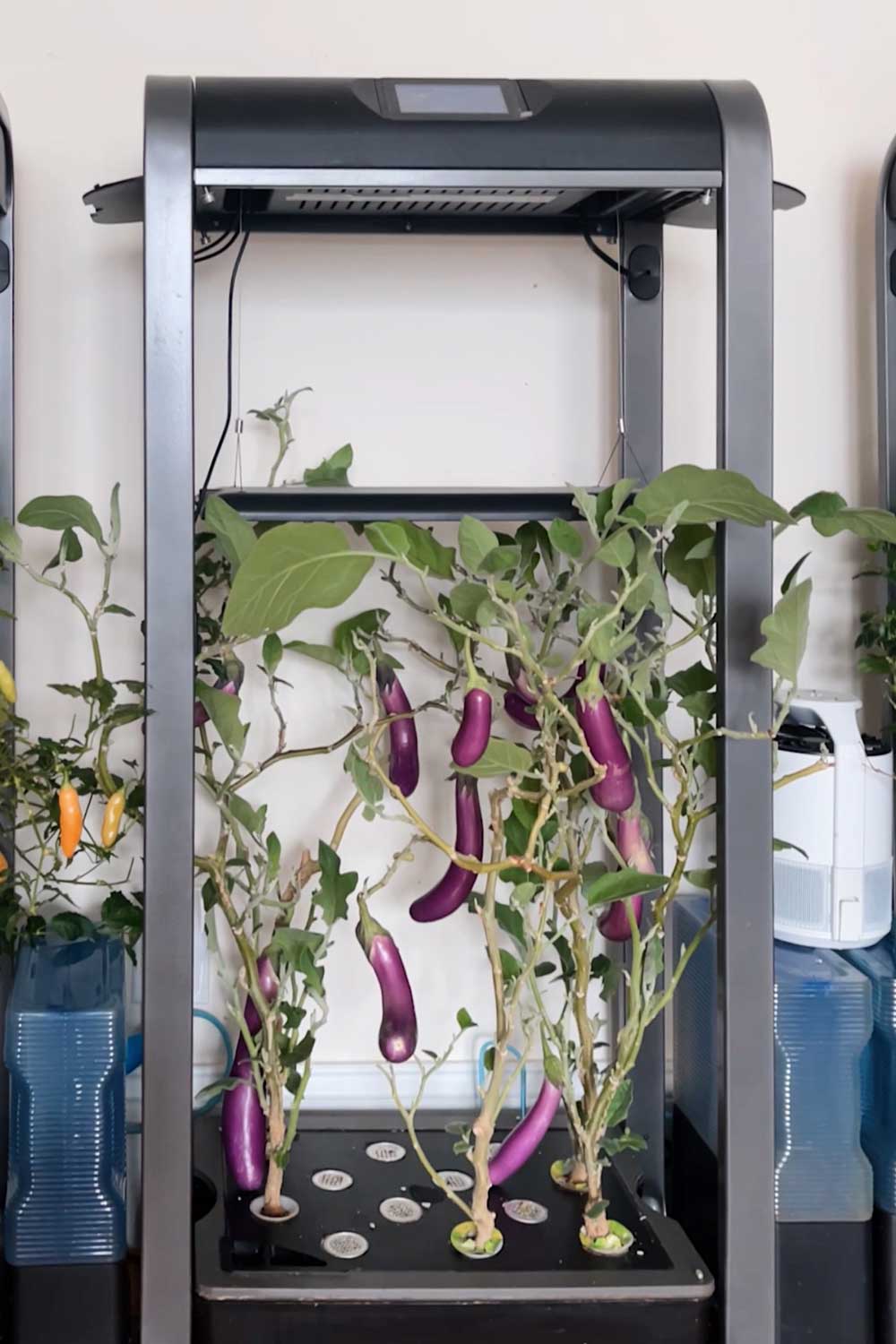
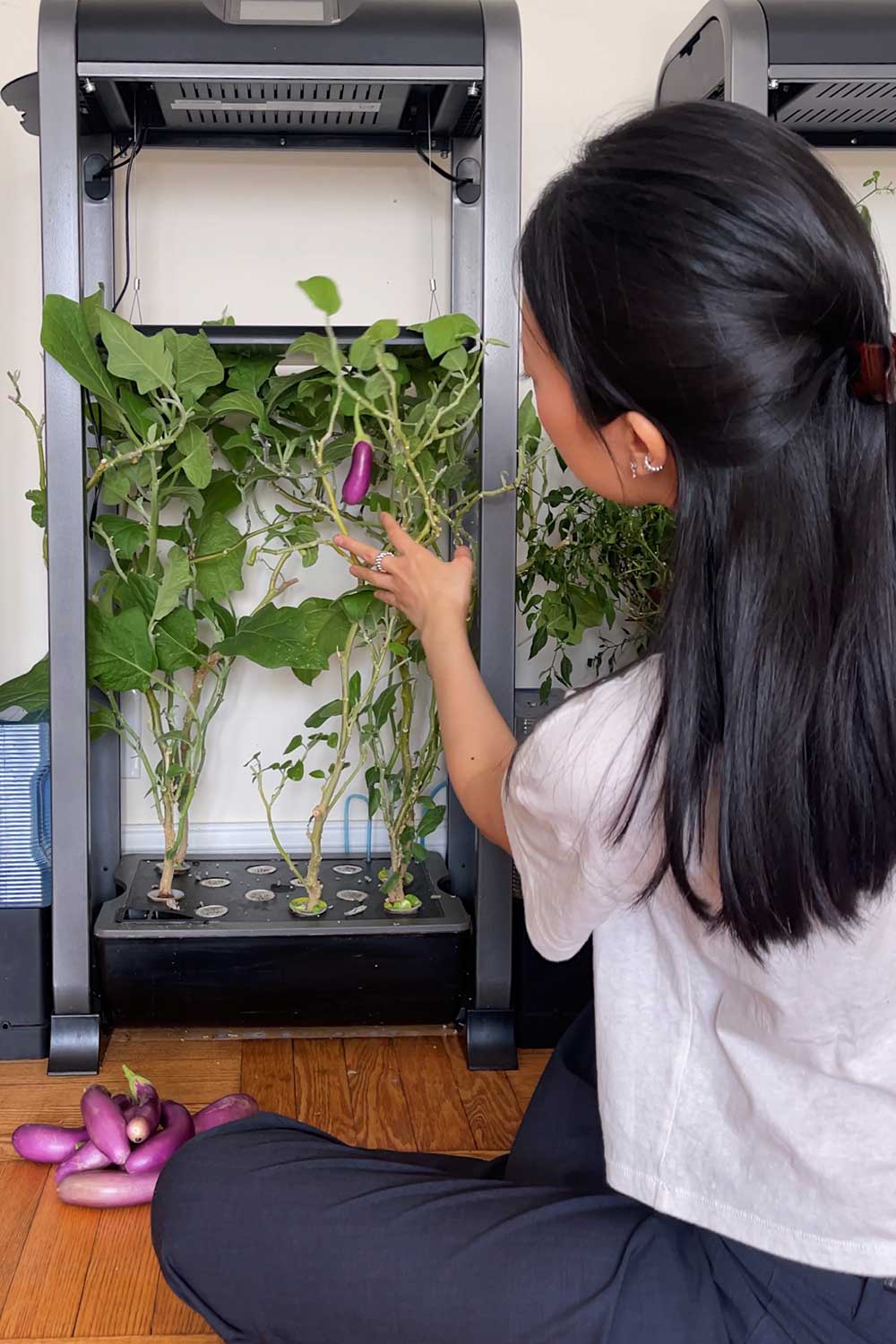
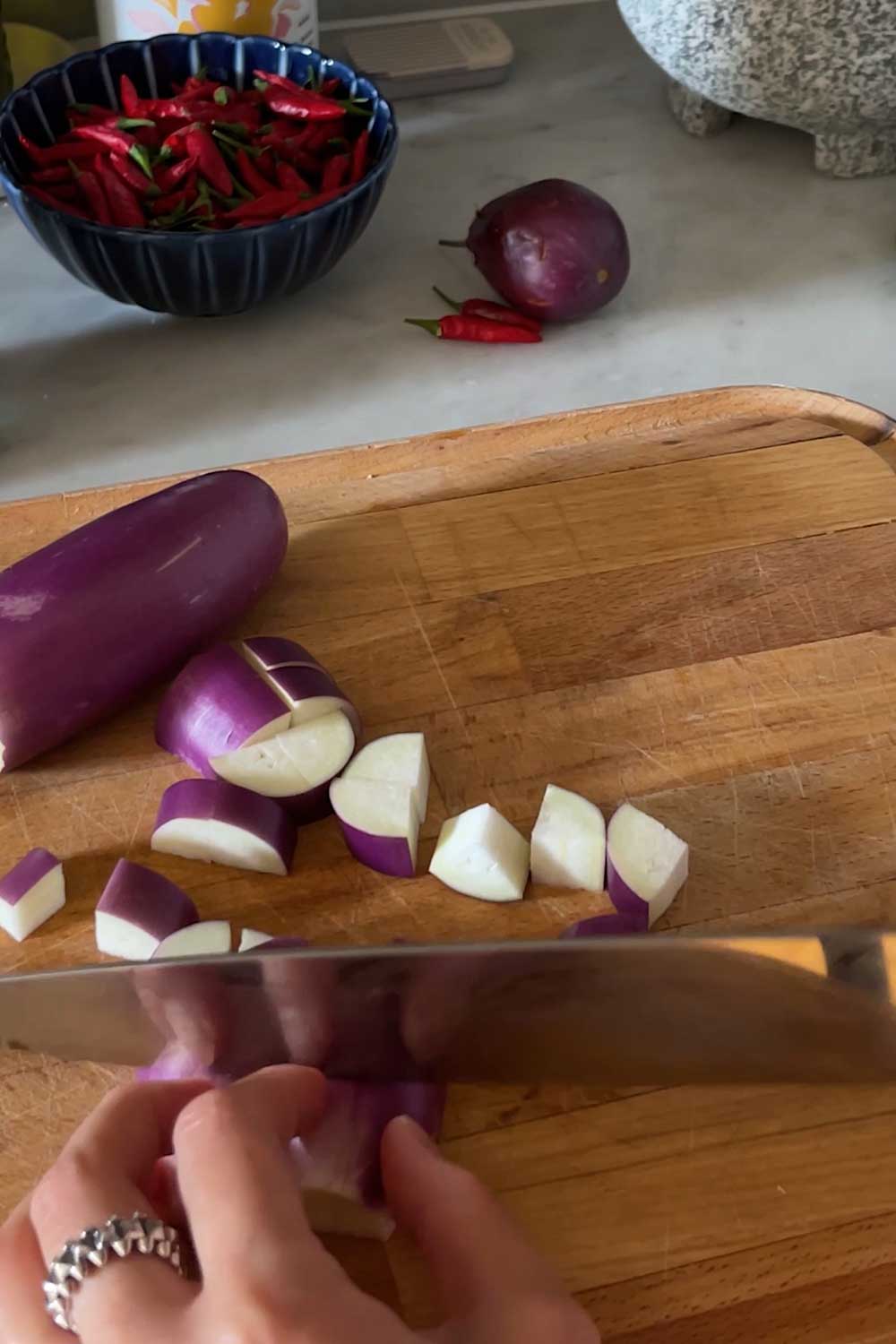
eggplants grow pretty quickly. I had ~4 plants in the Farm 12xl and was soon drowning in eggplants
Is Growing Eggplants Indoors Worth It?
I love growing Asian eggplants.
They have thinner skins and less seeds than American eggplants, so they taste much sweeter and better in my opinion!
I also love growing eggplants in fun colors, like white, orange, green and deep purple black, as well as eggplants in unique shapes.
Here are some fun eggplant varieties I’d recommend:
- container eggplant
- Thai ribbed eggplant
- Japanese pickling eggplant
- Japanese round eggplant
- Chinese string eggplant
- striped Italian eggplant
- Rosa bianca eggplant
- Turkish orange eggplant
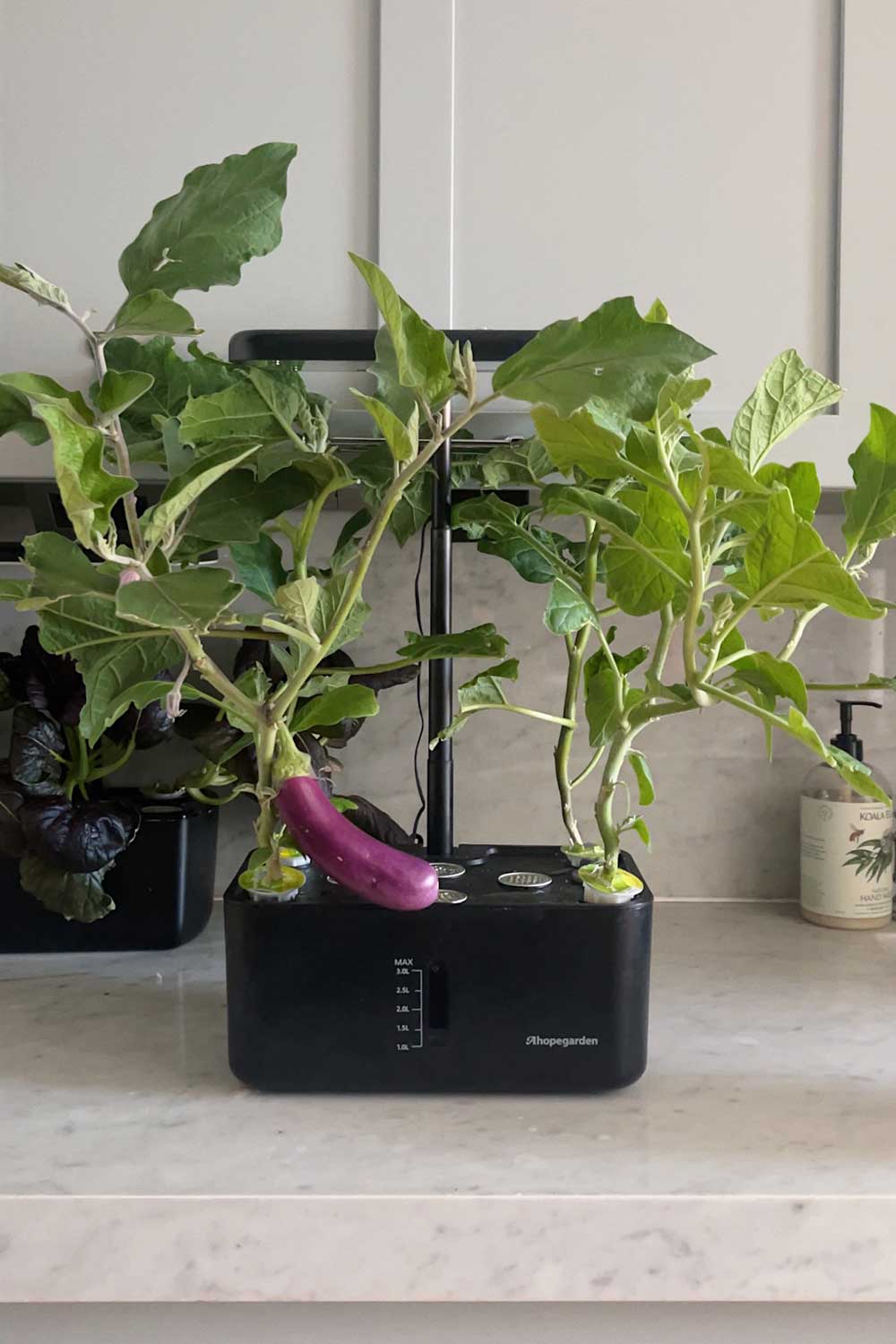
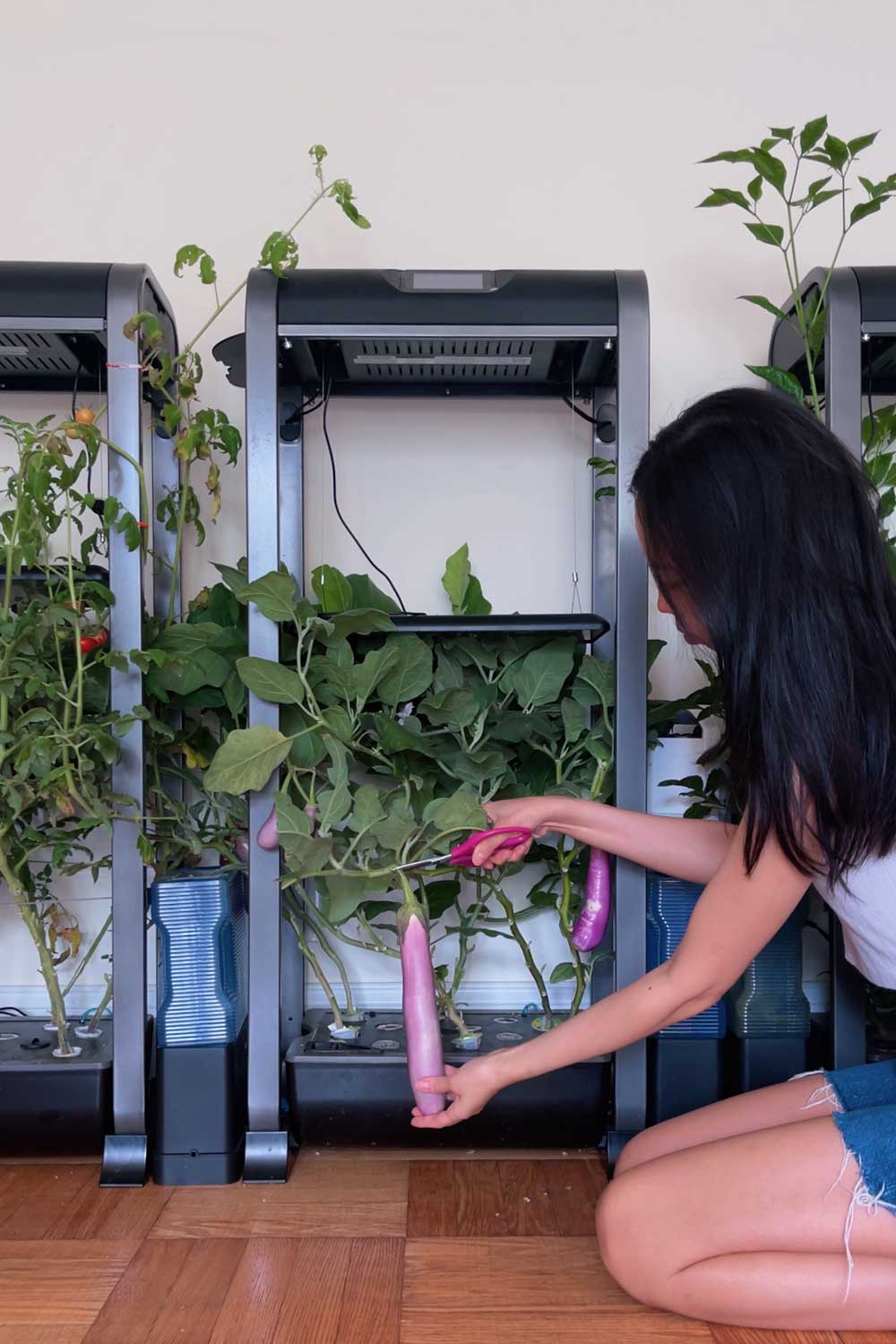
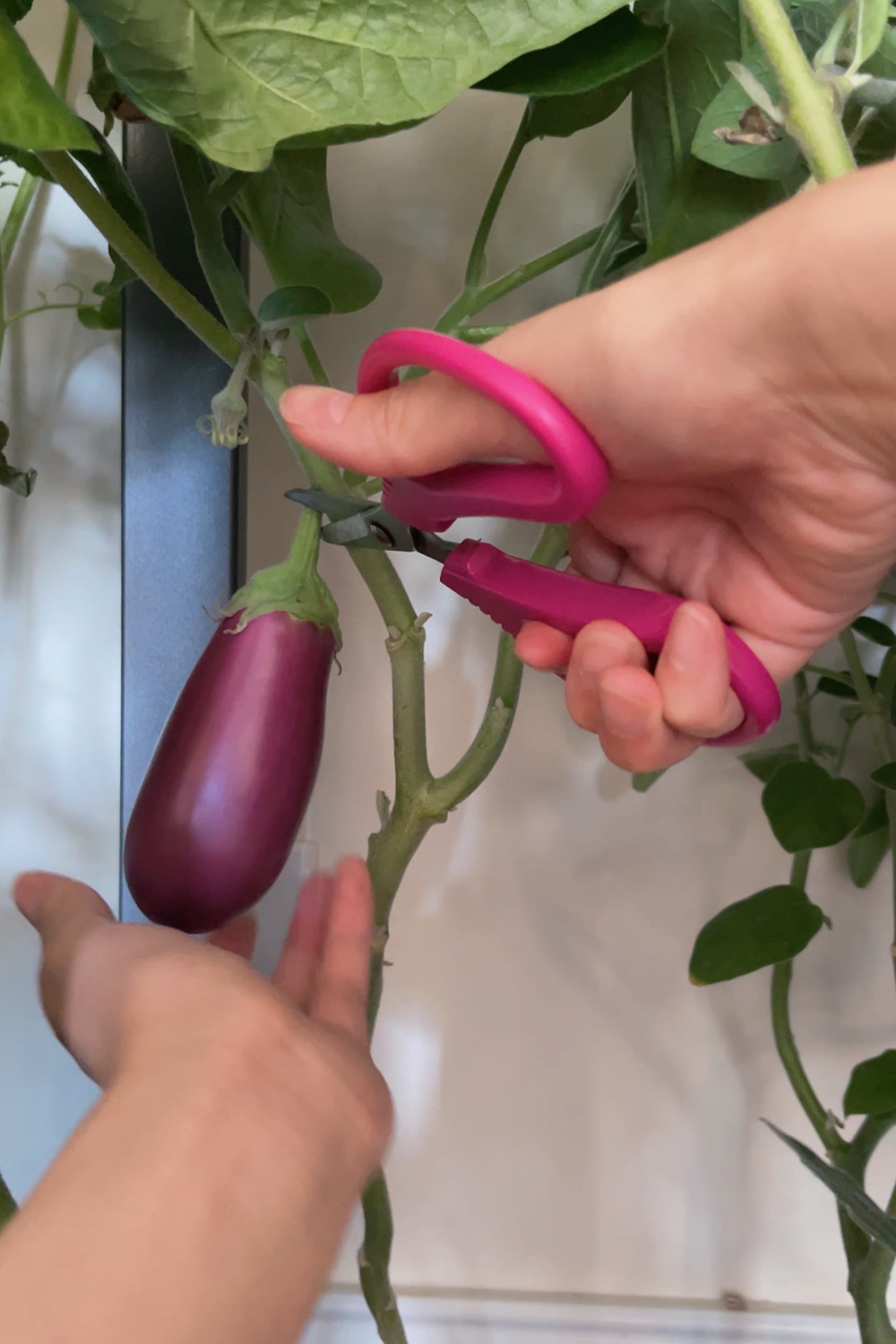
You can grow all different types of eggplants in different indoor garden setups.
And because eggplants need quite a bit of space, I’d recommend growing them in large hydroponic gardens:
Lettuce Grow Discount Code
Use SHER125 for $125 off any farmstand
Is It Economical to Grow Vegetables Indoors?
To calculate if eggplants are ‘worth it’, we can use the concept of ROI:
ROI (return on investment)
ROI = (Harvest value – Costs) / Cost
Harvest Value
At my local grocery store, organic Asian eggplants cost $3.99/lb.
I’m growing two varieties of eggplants in my Aerogarden Farm:
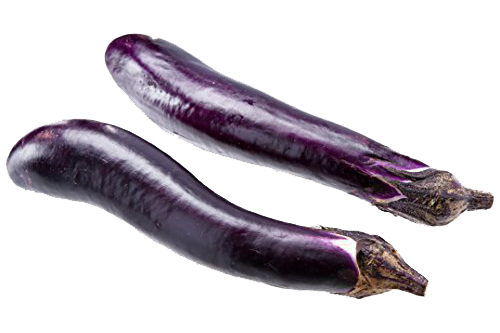
- this long skinny Chinese eggplant and
- this medium Japanese type
Eggplants start producing 60 – 70 days in, or around 2.5 months in.
Once they get going, they’re quite heavy producers and continue to push out new eggplants every 2.5 weeks or so.
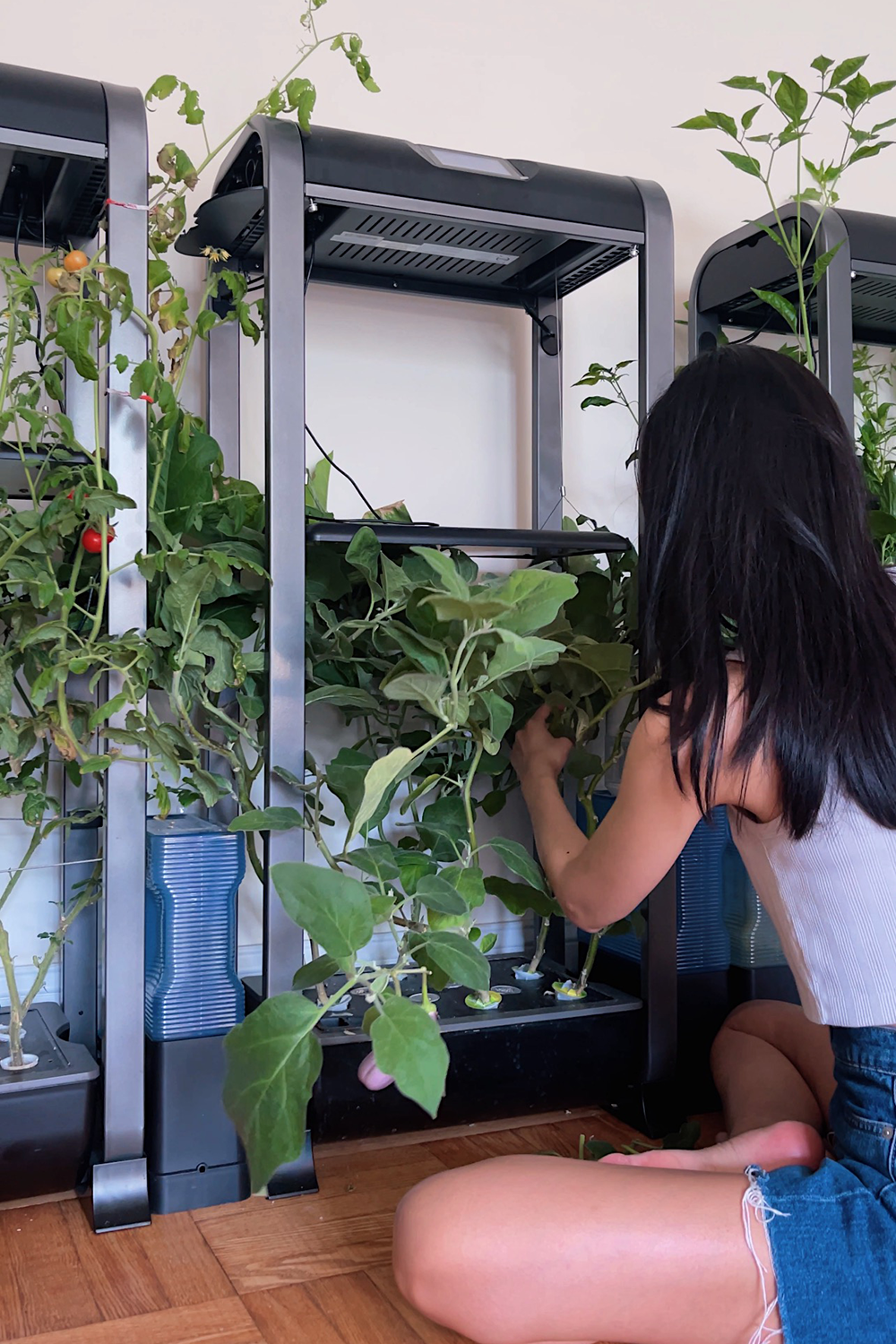
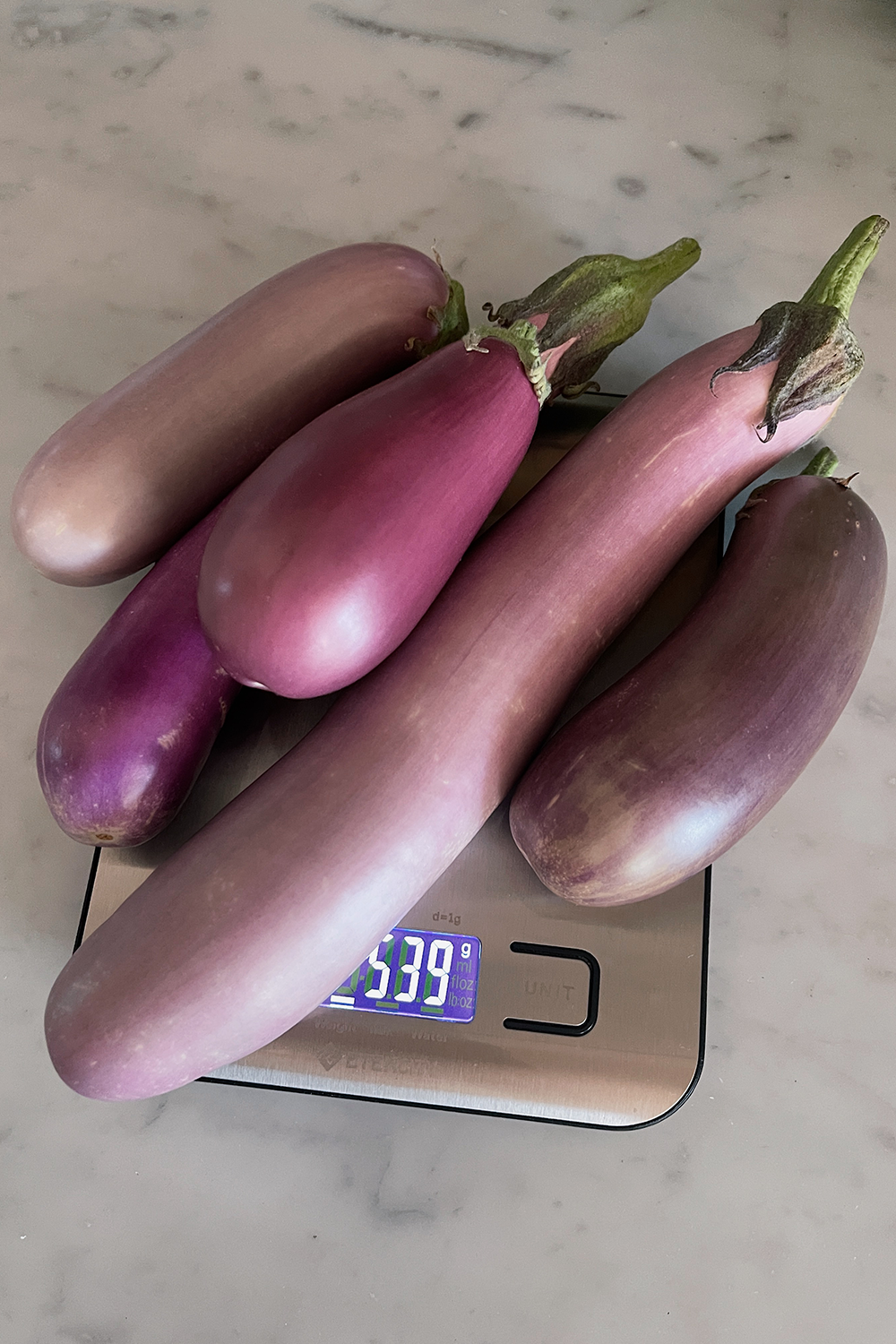
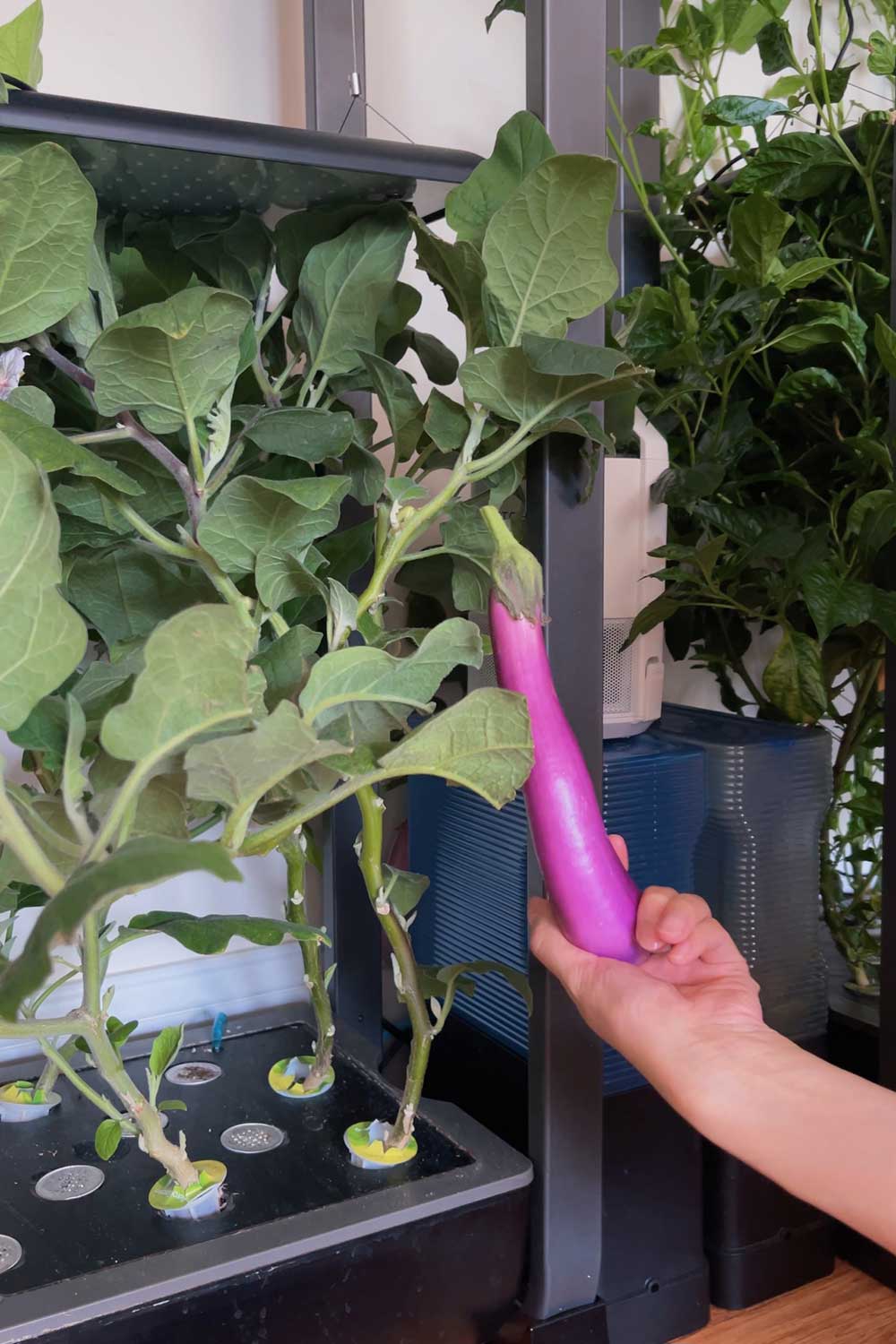
harvesting Asian eggplants that I grew inside my apartment
Conservatively, each month I’m able to harvest:
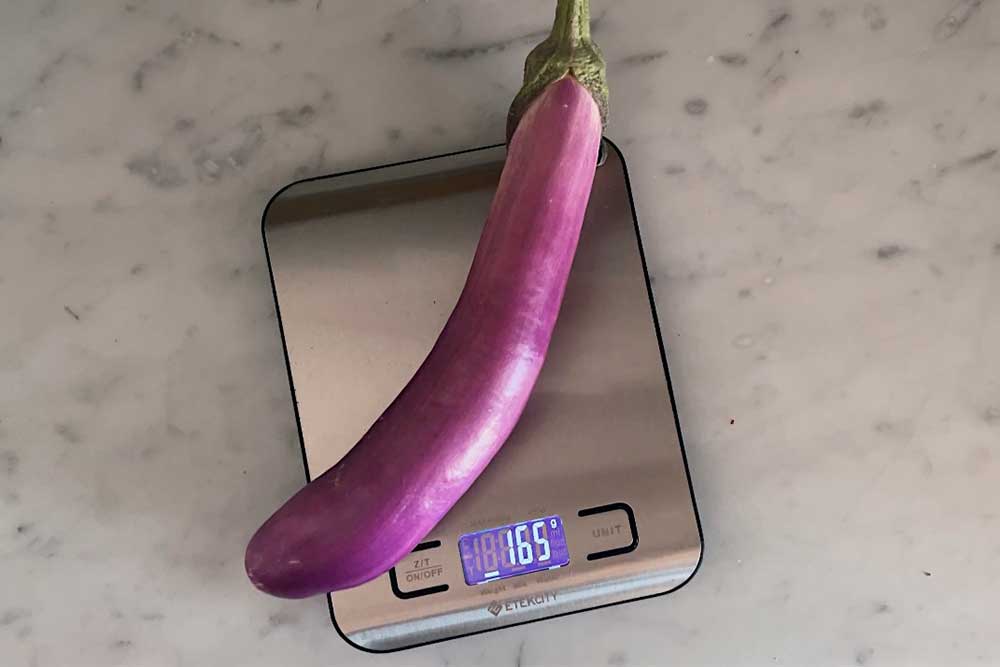
- 3 Chinese eggplants weighing ~152 grams each
- 6 Japanese eggplants weighing ~62 grams each
In total, that’s about 828 grams of eggplant a month, or 1.83 pounds.
I’ll estimate that my first full harvest occurs in month 4 and continues consistently through the end of the year.
In the first year, I can grow $65.72 of Asian eggplants.
Production value:
= 1.83 lb of eggplant x $3.99 value x 9 months
= $65.72
Eggplant Growing Costs
A pack of heirloom eggplant seeds costs $3.99 a pack.
I purchased two packs of different Asian eggplant varieties.
I planted just 5 seeds in my indoor garden, so the individual seed cost is pretty negligible.
Other supplies for indoor gardening include the seed baskets, sticker labels, humidity domes and sponges.
I re-use all of these from planting to planting except for sponges.
Hydroponic sponges cost 5 cents each, or $0.25 to grow 5 eggplants.
In total, supplies cost me $8.23
Supplies cost:
= $3.99 /seed pack x 2 + $0.05 sponge x 5
= $8.23
Electricity Cost
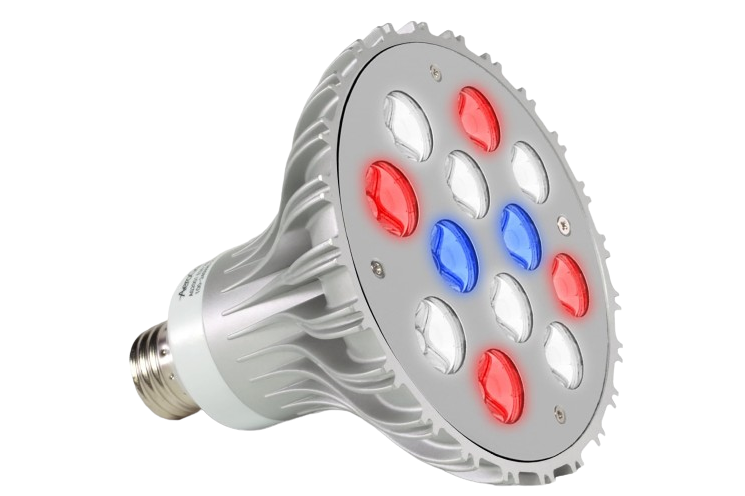
The main cost associated with growing vegetables indoors is electricity.
The Aerogarden Farm 24 uses 126 watts of power and costs $8.98 to run each month.
I used a Farm 12 to grow eggplants, so the electric cost for growing eggplants is half this, or $4.49.
(You can find an in-depth breakdown of Aerogarden electricity costs here)
12 months of electricity costs for the Harvest total $53.88.
Electricity cost:
= $4.49 cost x 12 months
= $53.88
Eggplant Garden ROI in Year 1
5.8% ROI
$65.72 in produce value
$53.88 in electricity costs
$8.23 in supply costs
Growing eggplants in an Aerogarden Farm is just slightly profitable in the first year, with a 5.81% ROI!
It’s a good thing I get a lot of joy out of growing eggplants, because they’re essentially a breakeven crop in the first year.
That’s mostly due to the heavy cost of powering the Aerogarden Farm.
Now let’s look at year 2.
I’m now in my second year of growing the same eggplants and they’re still as productive as ever.
The beauty of growing indoors is my vegetable plants don’t die of frost – I can grow year round!
Without the cost of supplies, the ongoing ROI of growing eggplants is just electricity.
But in year 2, we get a full 12 months of production, for a harvest value of $87.62.
Eggplant Garden ROI in Year 2
62.6% ROI
$87.62 in produce value
$53.88 in electricity costs
Year 2’s eggplant ROI is 62.6%!
That’s a BIG difference.
The Indoor Gardening Guide
Cyclosporiasis, e.coli — whatever outbreaks affect grocery produce hasn’t phased me
…because I grow my own clean, pesticide-free lettuce!
If you’re looking to start an indoor garden, I’ve written down my exact process for growing herbs, leafy greens and fruiting vegetables in my ebook:
Go from black thumbs to flourishing indoor gardener! See a sneak peek inside here
How to Make Gardening Cheaper Than Groceries
Growing eggplants in an Aerogarden Farm is much more profitable if you keep your existing plants running.
I’m glad I ran the math because I usually pull my plants out around the holidays, even if they’re still going strong.
Guess I shouldn’t always give into the urge to plant new things, when the value is really in year 2+!
Clearly, growing eggplants becomes more profitable with time, once the startup costs no longer factor into the equation.
It would also be cheaper to grow the eggplants in other hydroponic machines.
Smaller systems like the Letpot Max or Aerogarden Bounty use less powerful LEDs and cost less in electricity.
The Lettuce Grow tower grows up to 36 plants with one set of lights, so it’s also more economical.
Overall, despite the long duration needed to get a meaningful ROI when growing eggplants, I still feel like I’m getting my money’s worth as long as I grow hard-to-buy varieties :)
And in the current cyclospora outbreak, it gives me so much peace of mind to grow my own!
Follow me on
Youtube | Tiktok | Instagram | Substack | ShopMy


